

Introduction
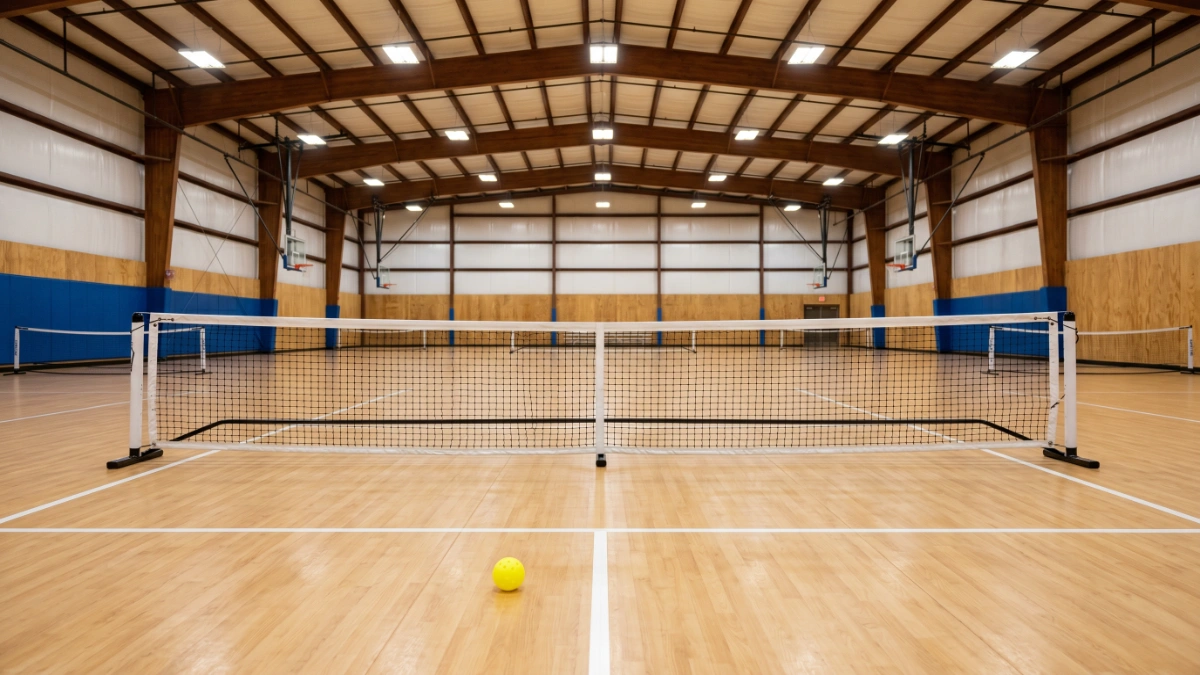
I still remember the afternoon I slipped on a dusty gym floor and landed hard on my right hip. I had driven forty minutes to a church hall that promised indoor pickleball courts on its Facebook page. The “court” turned out to be a single portable net set up on a basketball floor so slick I could see my own reflection. There was no kitchen line, the lights buzzed overhead, and a ceiling beam hung low enough to catch any deep lob. That fall cost me two weeks of playing time and a bruised ego that hurt worse than my hip. If you’ve ever limped home from a bad indoor facility, or spent hours searching “indoor pickleball courts near me” only to end up in a dark, dusty gym, If you’re looking for a complete overview of all court types, start with our ultimate guide to pickleball courts. But if indoor play is your focus, I wrote this indoor guide for you. I wrote this guide for you.
I’m a certified USA Pickleball referee who has coached over 200 beginners, and I’ve personally played on every indoor surface imaginable – polished hardwood, modular sport tiles, rubber‑topped gym floors, and cracked concrete in a converted warehouse. I’ve learned what makes an indoor court safe and enjoyable, and I’ve walked out of plenty that weren’t. In this guide, I’ll give you the exact same checklist I use to evaluate a new facility, show you how to find quality indoor pickleball courts near you, break down the costs, and even help you set up your own temporary court. No fluff – just the hard‑won, practical advice I wish I’d had before that fall.
What Are Indoor Pickleball Courts?
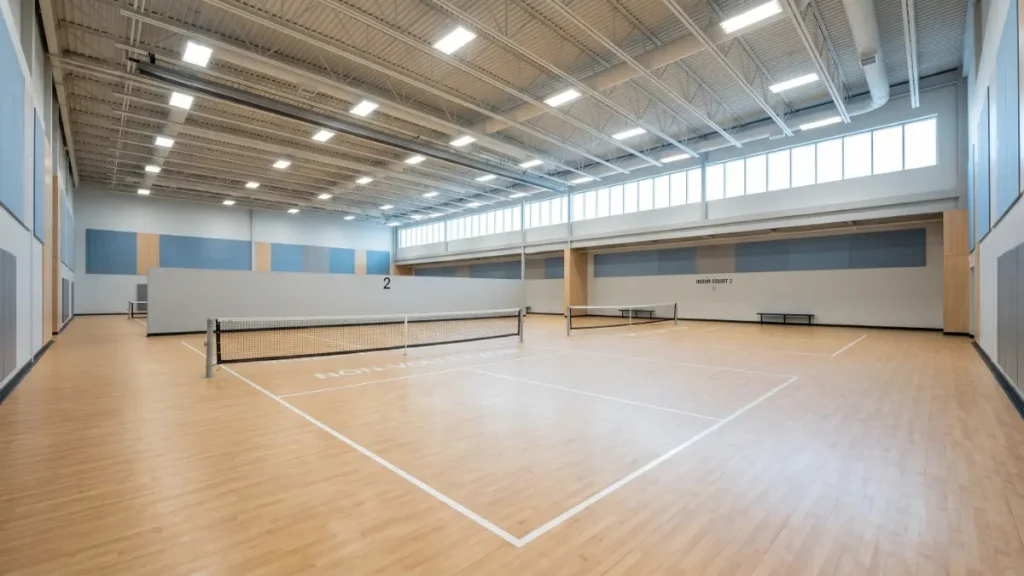
Indoor pickleball courts are the same size as outdoor ones – 20 feet wide and 44 feet long – but they’re built inside a building. The net is still 34 inches high at the center and 36 inches at the posts, and the kitchen is still 7 feet deep. The main differences are the surface, lighting, and the fact that you never have to worry about wind, rain, or sun in your eyes. For a full breakdown of court dimensions, surfaces, and markings, visit our complete pickleball courts guide.
In fact, Many indoor courts are shared with basketball or volleyball lines, so you’ll often see extra markings on the floor. Some facilities are dedicated pickleball venues with permanent courts, while others set up portable nets in a gym. Therefore, All of them give you the same great game, just in a controlled environment.
Benefits of Indoor Pickleball Courts
Playing indoors gives you benefits that outdoor courts simply can’t match.
- Weather‑proof: Rain, snow, extreme heat – none of it matters. You can play year‑round.
- Consistent bounce: Indoor surfaces are smoother and more predictable.
- Better lighting: No glare, no shadows moving with the sun.
- Joint‑friendly: Many indoor floors have some cushion, which is easier on knees and ankles.
- No wind: You never have to adjust your serve for a sudden gust.
In short, dedicated indoor pickleball courts solve all the weather and consistency problems that outdoor players face.
Indoor vs. Outdoor Pickleball Courts – Quick Comparison
Now, let’s compare the two environments.
| Feature | Indoor Courts | Outdoor Courts |
|---|---|---|
| Surface | Hardwood, sport tiles, rubber | Asphalt, concrete, acrylic |
| Ball type | Softer, 26 larger holes | Harder, 40 small holes |
| Lighting | Artificial, consistent | Sunlight, can cause glare |
| Weather | Climate‑controlled | Affected by rain, wind, heat |
| Net setup | Often portable | Often permanent |
| Typical cost | Drop‑in fees or membership | Usually free |
For a deeper comparison of indoor vs outdoor court features, read our ultimate pickleball courts guide.
Ceiling Height Requirements & Court Dimension
The floor you play on changes the speed and feel of the game.
- Hardwood (gym floor): Common in schools and rec centers. Fast bounce, but can be slippery if dusty.
- Sport tiles (modular): Interlocking plastic tiles with excellent traction and cushioning. Great for dedicated facilities.
- Rubber flooring: Found in some multi‑use gyms. Softer on joints, but ball bounce may feel slower.
- Concrete with acrylic coating: Rare indoors, but some warehouses use it. Feels like outdoor play.
Overall, For most players, hardwood or sport tiles offer the best indoor experience. Always bring non‑marking court shoes to protect the floor.
🧭 Indoor Surface at a Glance
| Surface | Bounce | Joint Impact | Typical Venue |
|---|---|---|---|
| Hardwood | Fast | Low‑medium | Gyms, YMCAs |
| Sport tiles | Medium | Low | Dedicated indoor facilities |
| Rubber | Slow | Very low | Multi‑use rec centers |
| Acrylic on concrete | Medium‑fast | High | Warehouse conversions |
Additionally, one often‑overlooked factor is the ceiling. The USA Pickleball official rulebook recommends a minimum ceiling height of 18 to 20 feet for comfortable play. Lower ceilings can interfere with lobs and overhead smashes. Every serious player should evaluate indoor pickleball courts for this critical clearance.
The court itself is 20×44 feet, with a 7‑foot kitchen on each side. You also need safety clearance around the court – at least 7 feet behind baselines and 4 feet beside the sidelines. So, When evaluating a facility, look up. If the ceiling is lower than 18 feet, lobs will hit it and the facility may not be suitable for serious play. If you’re planning to build your own indoor court, our court construction guide covers costs, materials, and step-by-step planning.
Lighting, Ventilation, and Climate Control
Good indoor courts pay attention to these three things:
- Lighting: LED fixtures that provide even, shadow‑free coverage. Avoid courts with lights directly over the net that create glare.
- Ventilation: Airflow matters. Stuffy gyms make long rallies exhausting.
- Climate control: Heating in winter, air conditioning in summer – a comfortable temperature keeps the game enjoyable and prevents the floor from becoming slippery.
In short, If you walk into a facility and it feels muggy or you can’t see the ball clearly, it’s probably not a great place to play. Good indoor pickleball courts never overlook these environmental factors.
How to Find Indoor Pickleball Courts Near You
Once you know what to look for, here’s how to find a court near you. The easiest way to locate indoor pickleball courts is to use the USA Pickleball Places2Play website. You can filter results to show only indoor facilities.
Additionally, Other methods:
- Google Maps: Search “indoor pickleball courts” plus your city name.
- YMCA / Jewish Community Centers: Almost every mid‑sized city has at least one that offers pickleball.
- Facebook groups: Join a local pickleball group and ask where people play indoors.
- PicklePlay app: Shows courts with real‑time availability and indoor/outdoor filters.
- Local parks & recreation websites: Many city rec centers list indoor drop‑in hours.
Keep in mind, Some public indoor courts are first‑come, first‑served, while others require an online reservation. Private facilities and YMCAs often let you book a slot via their app or phone. Always call ahead to confirm open‑play times and whether nets and balls are provided.
What to Look for in a Good Indoor Pickleball Court
Before you commit to a regular indoor spot, check these points:
- Ceiling height of at least 18 feet
- Clean, non‑slippery floor with clearly marked lines (no confusing basketball lines if possible)
- Adequate lighting (no dark corners or harsh glare)
- Properly set nets at 34″ center height
- Enough space between courts (avoid cramped setups)
- Clean restrooms and water fountains nearby
- Friendly staff and a visible schedule of open‑play times
⭐ Rate Your Indoor Facility (Scorecard)
Check each item that applies. 8‑10 checks = Great court. 5‑7 = Playable. Under 5 = Look elsewhere.
| Ceiling at least 18 ft high |
| Floor is clean & non‑slippery |
| Lines are clear and correctly marked |
| Net at correct height (34″ center) |
| Lighting is even with no glare |
| Enough space between courts |
| Climate‑controlled (heat / AC) |
| Restrooms & water nearby |
| Friendly staff & clear schedule posted |
| Safe surrounding area (no obstructions near court) |
Indoor Pickleball Equipment (Balls, Shoes, Paddles)
Indoor play requires slightly different gear than outdoor.
- Balls: Indoor balls are softer and have 26 larger holes. They bounce lower and are easier to control. Popular picks include Onix Fuse Indoor, Franklin X‑26 Indoor, and JOOLA Primo Indoor.
- Shoes: Non‑marking court shoes are essential. They protect the floor and give you the lateral support you need. Running shoes lack the lateral grip necessary for quick stops and turns, which can lead to ankle injuries.
- Paddles: The same paddle works indoors and outdoors. Just make sure it’s clean and free of debris that could scratch gym floors.
How Much Does It Cost to Play at Indoor Pickleball Courts?
Costs vary widely depending on the facility.
| Facility Type | Typical Cost |
|---|---|
| Public rec center (drop‑in) | $3 – $10 per session |
| YMCA (membership required) | $40 – $70/month, unlimited |
| Private pickleball club | $10 – $25 drop‑in, or $100+/month |
| Church / community hall | Often free or by donation |
Many places offer punch cards or monthly passes that reduce the per‑visit cost. If you play 3+ times a week, a YMCA membership usually pays for itself.
How Much Does It Cost to Build a Permanent Indoor Court?
If you want a dedicated indoor pickleball facility, construction costs vary widely. A basic court with a concrete base and acrylic surface starts around $20,000. High‑end installations with premium sport tiles, professional lighting, and climate control can exceed $100,000.
| Item | Estimated Cost |
|---|---|
| Base floor preparation | $5,000 – $15,000 |
| Sport tile or acrylic surface | $8,000 – $30,000 |
| LED lighting system | $3,000 – $10,000 |
| Net & posts (permanent) | $500 – $1,500 |
| HVAC / climate control | $2,000 – $10,000+ |
Many homeowners convert existing garages or outbuildings to save on base costs. A high‑quality residential sport court system installed by a professional team typically runs $30–$60 per square foot, including surface and labor. For a full cost breakdown and DIY vs professional installation comparison, check out our court construction guide.
How to Build or Set Up an Indoor Pickleball Court (DIY)
You don’t need a permanent facility to play indoors. Many groups set up temporary courts in gymnasiums, church halls, or even large garages.
What you’ll need:
- Portable net (adjustable to 34″ center height)
- Court tape or temporary chalk to mark lines
- Measuring tape (at least 50 feet)
- Indoor pickleballs (softer, 26 holes)
Step‑by‑step:
- Measure and mark the 20×44‑foot playing area.
- Mark the 7‑foot kitchen line on each side.
- Draw the centerline dividing the service boxes.
- Place the net at the midpoint.
- Double‑check net height (34″ center) and that there’s enough run‑off space.
Most importantly, Always get permission from the facility owner before marking any floors. Painter’s tape that removes cleanly is a must.
Alternatively, For a permanent indoor court, companies like Sport Court offer modular tile systems that can be installed over an existing concrete slab. These systems provide consistent bounce, custom colors, and built‑in shock absorption. A professional installation team handles leveling, tile layout, and line painting, ensuring the court meets official specifications. Many facilities also add permanent net posts and LED lighting packages.
Court Markings and Net Setup
Indoor courts often share floors with other sports. If you’re responsible for marking the court:
- Use 2‑inch wide tape or temporary paint.
- Mark baselines, sidelines, kitchen lines, and centerlines clearly.
- Choose a color that contrasts with the floor (white on wood, yellow on dark tiles).
- Remove tape after each session if the facility requires it.
Specifically, the net should be 36 inches at the posts and 34 inches at the center. Always carry a tape measure to check before you start. Most well‑maintained indoor pickleball courts have clearly taped or painted lines that contrast with the floor. For a complete comparison of net setups on pickleball vs tennis courts, read our net vs tennis court guide.
Safety Considerations
Indoor environments have their own safety rules.
- Never run into walls, stage edges, or bleachers – always check the surrounding space before you play.
- Keep liquids away from the playing surface to prevent slips.
- Use padded net posts if possible.
- Warn players about low ceiling obstructions (beams, lights, basketball backboards).
- Always warm up, especially on hard wood floors, to protect your joints.
- Regular safety checks keep indoor pickleball courts accident‑free.
Maintenance of Indoor Pickleball Courts
As a result, if you manage or frequently use an indoor facility, a little upkeep goes a long way.
- Sweep or vacuum the floor before play to remove dust.
- Wipe up spills immediately.
- Check net tension and replace worn cables.
- Repaint or re‑tape lines as they fade.
- Inspect the ceiling for loose fixtures that could fall.
Interactive Indoor Pickleball Court Diagram
Tap any zone on the court below to see its rule and dimension, just like you would on a real indoor court.
🏓 Interactive Pickleball Court
Tap a zone to see its rule & official dimensions.
Download Your Free Indoor Pickleball Court Checklist & Diagram
I created a one‑page PDF with a pre‑play facility evaluation, a mini court diagram, key measurements, and tips for finding the best indoor courts. Print it and bring it with you.
🏓 Indoor Court Checklist & Diagram
Your 1‑page PDF includes:
- ✅ Mini court diagram with dimensions
- ✅ Pre‑play facility evaluation checklist
- ✅ Surface comparison chart
- ✅ Indoor equipment checklist
- ✅ Tips for finding and booking indoor courts
Print it and never wonder about court quality again.📥 Download as PDF.
Frequently Asked Questions (FAQ)
Are indoor courts the same size as outdoor?
Yes, the official court size is the same: 20×44 feet.
What kind of ball do you use indoors?
Indoor balls are softer and have 26 larger holes. They bounce lower and are easier to control.
Do I need special shoes for indoor pickleball?
Non‑marking court shoes are recommended. They protect the floor and give you better lateral support.
What ceiling height is required for indoor pickleball?
At least 18 to 20 feet is recommended for competitive play. Lower ceilings may interfere with lobs.
How do I find indoor courts near me?
Use places2play.org, Google Maps, or the PicklePlay app. YMCAs and community centers are great places to start.
Can I set up a court in my garage?
Yes, if you have enough space (30×60 feet is ideal). Use a portable net and temporary court tape.
How much does indoor play cost?
Drop‑in fees range from $3 to $25. Memberships at YMCAs or private clubs offer unlimited play for a monthly fee.
Indoor Pickleball Courts – Key Takeaways
✅ Indoor Pickleball Courts – Key Takeaways
- Indoor courts are 20×44 ft – same dimensions as outdoor.
- Ceiling height of 18–20 ft is recommended for serious play.
- Best surfaces: hardwood or sport tiles for joint comfort and consistent bounce.
- Use indoor balls (26 larger holes) and non‑marking court shoes.
- Find courts via places2play.org, Google Maps, PicklePlay app, or local YMCAs.
- Drop‑in fees range $3–$25; YMCA membership often pays for itself if you play 3+ times/week.
- Always evaluate lighting, floor cleanliness, and net height before committing to a facility.
- Download the free checklist above to inspect any new indoor court.
You’re Ready to Play Indoors
That slip on the dusty gym floor taught me a lesson I’ve never forgotten: a bad indoor court is worse than no court at all. Since that day, I’ve made it my personal mission to help other players avoid the same mistakes. I’ve tested dozens of facilities as a player, a coach, and a referee. I’ve helped community centers fix their lighting and shown YMCA staff how to check net heights before a tournament. I still carry a small tape measure in my bag – the same one I used to measure ceiling clearance in a repurposed racquetball court that turned out to be one of the best indoor spots I’ve ever found.
Everything in this guide – from the surface comparisons to the ceiling‑height checklist – comes from real‑world experience, not just reading the rulebook. Furthermore, I update this article every year when new facility standards are published, and I stand behind every recommendation. The right indoor court will keep you playing safely and happily when the weather says otherwise.
Bookmark this guide, download the checklist, and take it with you the next time you scout a new facility. You now know exactly what to look for, what to avoid, and how to build your own setup if needed. Now go find your perfect indoor pickleball court and play all year long without ever worrying about the forecast again.
👉 Download the free indoor court checklist
When you’re ready for more, read our Complete Pickleball Rules 2026 Guide or test your skill with the Free Skill Analyzer.
