

Introduction
I used to warm up by tapping the ball back and forth. No plan, no focus—just hitting. My progress crawled until a coach handed me a scrap of paper with five specific pickleball drills. Three weeks later my dinks dropped on a dime, my volleys felt crisp, and I’d stopped popping up easy balls. That little piece of paper changed everything. If you’ve ever walked onto a court unsure what to work on, or you want to get better but don’t always have a partner, this guide is for you. Once you’ve built your skills with these drills, master the soft game with our ultimate guide to the dink shot – the two go hand in hand.
I’m a certified USA Pickleball referee and I’ve coached over 200 players. I’ve tested dozens of drills with beginners, intermediates, and tournament competitors, so I know which ones deliver the fastest results. In this article I’ll share a complete practice system: solo drills you can do anywhere, partner drills that build real match skills, structured practice plans, and a free interactive timer to keep you on track. No fluff—just the drills that actually work.
Quick‑Start: 5 Drills When You’re Short on Time
If you only have ten minutes, these five moves target the skills that matter most.
- Wall Dink (solo) – Builds touch and consistency.
- Shadow Footwork (solo) – Trains your feet without a ball.
- Cross‑Court Dinking (partner) – The safest and most important rally pattern.
- Volley‑to‑Volley (partner) – Develops fast hands at the net.
- Serve Accuracy Challenge (solo) – Turns your serve into a weapon.
All drills in this guide follow the official standards set by USA Pickleball.
Warm‑Up & Cool‑Down: The Bookends of Every Good Session
A proper warm‑up prevents injury, and a cool‑down helps your body recover.
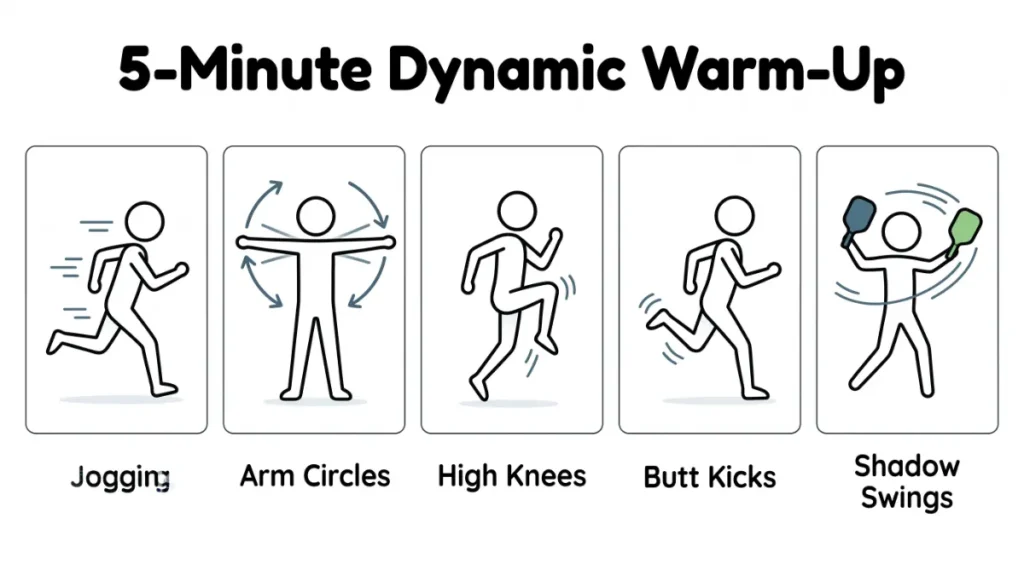
5‑Minute Dynamic Warm‑Up
- Jog lightly around the court for 2 minutes.
- Arm circles (forward and backward), 30 seconds each direction.
- High knees and butt kicks, 30 seconds each.
- Shadow swings with your paddle: 10 dinks, 10 drives, 10 serves.
These quick movements prepare your body for the more intense work ahead.
3‑Minute Cool‑Down
- Walk slowly for a minute while breathing deeply.
- Gently stretch your shoulders, wrists, and lower back.
- Roll your neck and shake out your legs.
A gentle cool‑down helps your body recover after a focused practice. Don’t skip it—your touch will be sharper from the very first drill, and your muscles will thank you tomorrow.
Solo Pickleball Drills (No Partner Needed)
You can make huge progress by yourself. All you need is a paddle, a ball, and a wall or a court. These solo pickleball drills are designed to fit into even the busiest schedule.
Wall Dinking Pickleball Drill for Consistency
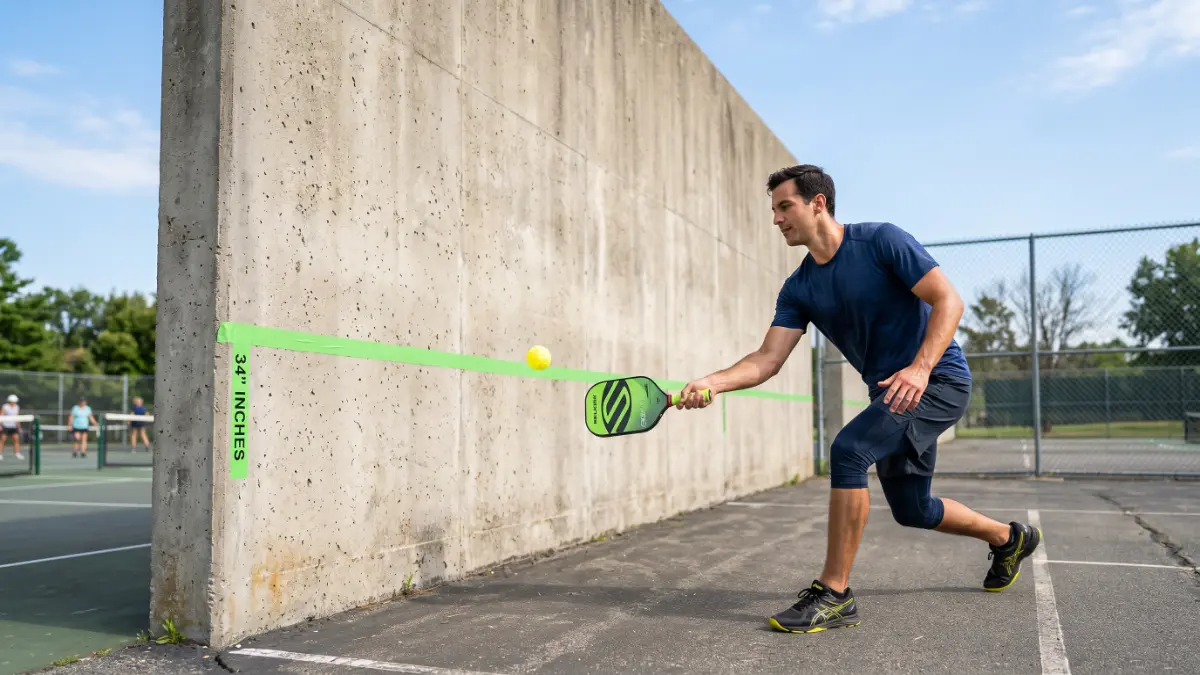
Stand 3–4 feet from a wall and mark a line at net height (34 inches) with tape. Hit soft, controlled shots so the ball rebounds just above that line. Aim for 30 consecutive dinks without missing. This drill teaches you to keep the ball low and land it in the kitchen.
Shadow Swings
Without a ball, practice your strokes. Hit 20 forehand dinks, 20 backhand dinks, 20 volleys, and 20 serves. Focus on a quiet upper body, bent knees, and a short, smooth swing. It builds muscle memory, and you can do it in your garage or living room.
Serve Practice
Set up targets—a towel, a cone, or a water bottle—in the service box. Serve 20 balls and count how many land within a paddle length of the target. Try to beat your record each session. A deep, accurate serve wins points before the rally even begins.
Footwork Ladder (Shadow)
Imagine a ladder on the ground or use chalk to draw one. Move quickly through the ladder pattern: two feet in each square, lateral hops, in‑and‑out shuffles. Quick feet at the kitchen line will win you more points than you think.
20‑Minute Solo Routine
- Warm‑up (5 min)
- Wall dinking (5 min)
- Shadow swings & footwork ladder (5 min)
- Serve accuracy challenge (5 min)
Do this routine three times a week, and you’ll see better control and movement in your matches.
Partner Drills (Two Players)
When you have a practice partner, you can work on realistic rally patterns. These exercises build chemistry and shot selection.
Cross‑Court Dinking
Stand diagonally from your partner at the kitchen line. Dink softly back and forth, aiming for the opposite kitchen corner. Count how many you can hit in a row without an error. Try to reach 40 or more. This is the backbone of the soft game.
Dink, Dink, Drive
Rally cross‑court dinks. After at least three dinks, the player who receives a slightly high ball drives it down the line. Then reset to dinking. This progression teaches you to recognize attackable balls.
Volley‑to‑Volley
Stand 5–7 feet apart at the net. Volley back and forth quickly, keeping the ball in the air. Work up to 50 consecutive volleys. Your hands and reaction time will sharpen fast.
Third‑Shot Drop Reps
One player stands at the baseline and feeds a ball to the kitchen. The net player hits a return deep, and the baseline player hits a third‑shot drop into the kitchen. Switch roles after 10 reps. This is the most important shot in pickleball, and this drill builds it into your muscle memory.
Transition Reset Drill
The baseline player hits a drive to the net player, who volleys it back deep. The baseline player then moves forward while hitting a soft reset into the kitchen. This simulates moving from defense to offense, and it’s one of the best ways to make your transitions automatic.
30‑Minute Partner Routine
- Cross‑court dinking (5 min)
- Volley‑to‑volley (5 min)
- Dink, dink, drive (5 min)
- Third‑shot drop reps (5 min)
- Transition reset drill (5 min)
- Serve and return practice (5 min)
Drills by Skill
Now, let’s break things down by the specific skill you want to target. Not sure which drills match your current ability? Check our pickleball levels guide to self-assess where you stand before choosing your practice plan.
Dinking
- The Dink Drill: Hit straight‑ahead dinks with a partner, keeping the ball low and controlled. Aim for a small target, like a cone.
- Cross‑Court Dink Game: Play to 5 points. Only dinks count—drives or volleys lose the point. This forces you to use touch.
- Wall Dinking: (covered in solo drills)
Volleys
- Volley Ladder: Start close to the net. After every 5 successful volleys, take one step back. See how far you can go while keeping control.
- Volley to Volley: (covered in partner drills)
Serving
- Serve and Return Drill: One player serves, the other returns deep. Play out the point. Emphasize a deep return that keeps the server back.
- Serve Accuracy Challenge: (covered in solo drills)
Footwork
- Shadow Footwork & Footwork Ladder: (covered in solo drills)
- The Footwork Drill: Stand at the kitchen line. Have a partner feed balls randomly left and right. Move your feet to hit each ball with a soft dink. Stay balanced.
Third‑Shot Drop & Transition
- Third Shot Drop Drill: (already covered in partner drills), The third-shot drop is one of the most important shots in pickleball. Our ultimate guide to the dink shot breaks down the technique step by step.
- Transition Reset Drill: (already covered in partner drills)
📈 Drill Progression Chart (Beginner → Advanced)
| Skill | Beginner Drill | Intermediate Drill | Advanced Drill |
|---|---|---|---|
| Dinking | Wall Dinking | Cross‑Court Dinking | Dink, Dink, Drive |
| Volleys | Volley‑to‑Volley | Volley Ladder | Rapid‑Fire Angle Volleys |
| Serving | Serve Accuracy | Serve and Return | Targeted Serve Sequence |
| Footwork | Shadow Footwork | Footwork Ladder | Random Feed Footwork |
| Third Shot | Drop from mid‑court | Third‑Shot Drop Reps | Transition Reset Drill |
Structured Practice Plans
Here are ready‑to‑follow plans for different time commitments. Pick one and start turning these pickleball drills into lasting habits.
30‑Minute Plan (Beginner)
- Warm‑up (5 min)
- Wall dinking (5 min)
- Shadow footwork (5 min)
- Serve accuracy challenge (5 min)
- Cross‑court dinking with partner (5 min)
- Cool‑down (5 min)
60‑Minute Plan (Intermediate)
- Warm‑up (5 min)
- Wall dinking & shadow swings (10 min)
- Cross‑court dinking & dink‑dink‑drive (10 min)
- Volley‑to‑volley & volley ladder (10 min)
- Third‑shot drop reps (10 min)
- Serve and return practice (10 min)
- Cool‑down (5 min)
90‑Minute Plan (Advanced / Tournament Prep)
- Warm‑up (10 min)
- Solo drills: wall, footwork, serves (15 min)
- Dink rallies: straight, cross‑court, pressure game (15 min)
- Volley sequences: ladder, rapid fire, angle volleys (15 min)
- Third‑shot drops & transition resets (15 min)
- Match simulation: play a practice set focusing on drilled skills (15 min)
- Cool‑down (5 min)
Common Pickleball Drill Mistakes (and How to Fix Them)
I see these errors all the time with players who practice without guidance.
| Mistake | Why It Happens | How to Fix It |
|---|---|---|
| Dinks pop up too high | Too much arm, not enough knee bend | Shorten your swing, bend your knees, and lift gently with your legs. |
| Volleys go wild | Over‑swinging | Keep your paddle in front of your body. Use a short punch motion. |
| Serves miss the target | No target practice | Always aim for a specific spot, not just “in.” Use visual targets. |
| Skipping footwork drills | They feel boring | Turn them into a game. Footwork separates good players from great ones. |
| Practicing without a plan | Not knowing what to work on | Use the structured plans above. Write down your goal before each session. Many drill mistakes start with the wrong grip. Our complete pickleball grip guide covers types, sizes, and proper technique to fix them. |
Interactive Pickleball Drills Timer & Generator
Your personal practice coach – fresh drills, timed to perfection.
⏱️ Drill Timer & Generator 🏓
Your personal practice coach – fresh drills, timed to perfection.
Download Your Free Drill Deck (PDF)
Print these 8 double‑sided drill cards, shuffle them, and turn every practice session into a focused workout.
| Solo • Control | Wall Dinking Stand 3‑4 ft from a wall, mark 34″, hit 30 soft dinks without missing. |
| Partner • Precision | Cross‑Court Dinking Dink diagonally into the opposite kitchen. Count consecutive shots. |
| Partner • Speed | Volley‑to‑Volley Stand 5‑7 ft apart, keep the ball in the air. Work up to 50 volleys. |
| Solo • Serve | Serve Accuracy Set targets in the service box, serve 20 balls, track your accuracy. |
No sign‑up required • Instant download • Optimised for printing
✅ Key Takeaways
- Start every session with a 5‑minute dynamic warm‑up to prevent injury.
- Solo drills like wall dinking and shadow footwork can be done anywhere, no partner needed.
- Cross‑court dinking is the single most important drill for improving your soft game.
- Use the structured 30/60/90‑minute plans to stay on track.
- Aim for measurable goals: 30 wall dinks, 50 volleys, serve accuracy targets.
- Download the drill deck and use the interactive timer to keep practice fresh. Combine these drills with our ultimate guide to the dink shot to become a complete player at the net.
Frequently Asked Questions
What are the best pickleball drills for beginners?
Start with wall dinking, shadow swings, and serve accuracy. These build touch, footwork, and a reliable serve without needing a partner.
How can I practice pickleball alone?
Use a wall to practice dinks and volleys. Shadow swing for technique, and serve against a fence with targets. Solo footwork drills also work great, and you can do them in a garage or driveway.
What is a good pickleball practice routine?
A balanced routine includes warm‑up, solo skill work, partner drills, and a cool‑down. The 30‑ or 60‑minute plans in this guide give you a clear structure.
How do I improve my pickleball dinking with drills?
Practice cross‑court dinking daily. Start by counting consecutive dinks, then add pressure with the dink‑dink‑drive drill. Consistent practice will build your touch and control.
Can you practice pickleball without a court?
Yes. Wall drills work in a garage, driveway, or any flat wall. Footwork and shadow s
wings require only a small space.
What drills do pro pickleball players do?
Pros drill cross‑court dinking, volley ladders, third‑shot drops, and transition resets relentlessly. They also use match‑simulation games with specific scoring rules to stay sharp. Want to take your practice to the next level with professional guidance? Our pickleball lessons guide helps you find the right coach for your goals.
You’re Ready to Drill with Purpose
I wasted months hitting balls without a plan. The right pickleball drills changed everything. The moment I adopted a structured drill routine, my consistency took off. The same exercises in this guide have helped my students go from barely keeping a rally alive to winning tournaments.
Bookmark this guide, download the drill deck, and use the interactive timer to make every practice count. Whether you’re alone in your garage or on a court with a partner, every rep gets you closer to the player you want to be.
For more resources, read our Complete Pickleball Rules 2026 Guide or test your skill with the Free Skill Analyzer. Now grab your paddle and get to work. You’ve got this.
