
The first time a tournament director asked for my skill level, I froze. I stammered “3.5,” instantly regretted it, and spent the next hour getting completely dismantled. I couldn’t return a single serve, my dinks popped up like they were on springs, and I walked off the court having scored two points total. That humiliating afternoon taught me that pickleball levels aren’t just casual labels—they decide whether you have a fun, competitive match or get humiliated. If you’ve ever been stumped by the question “What level are you?” or terrified of entering the wrong tournament bracket, I wrote this guide for you.
I’m a certified USA Pickleball referee who has helped hundreds of players self‑rate, train, and climb the skill ladder. I’ve seen the confusion on a 2.5 player’s face when they’re thrown into a 3.5 game, and I’ve watched a 4.0 player steamroll a casual league because no one checked their rating. In this article, I’ll walk you through every USAPA skill level from 1.0 to 5.0+, explain the DUPR and UTPR systems, give you an interactive self‑assessment tool, and share a free downloadable checklist. No confusing jargon—just clear, practical advice on understanding and improving your pickleball level.
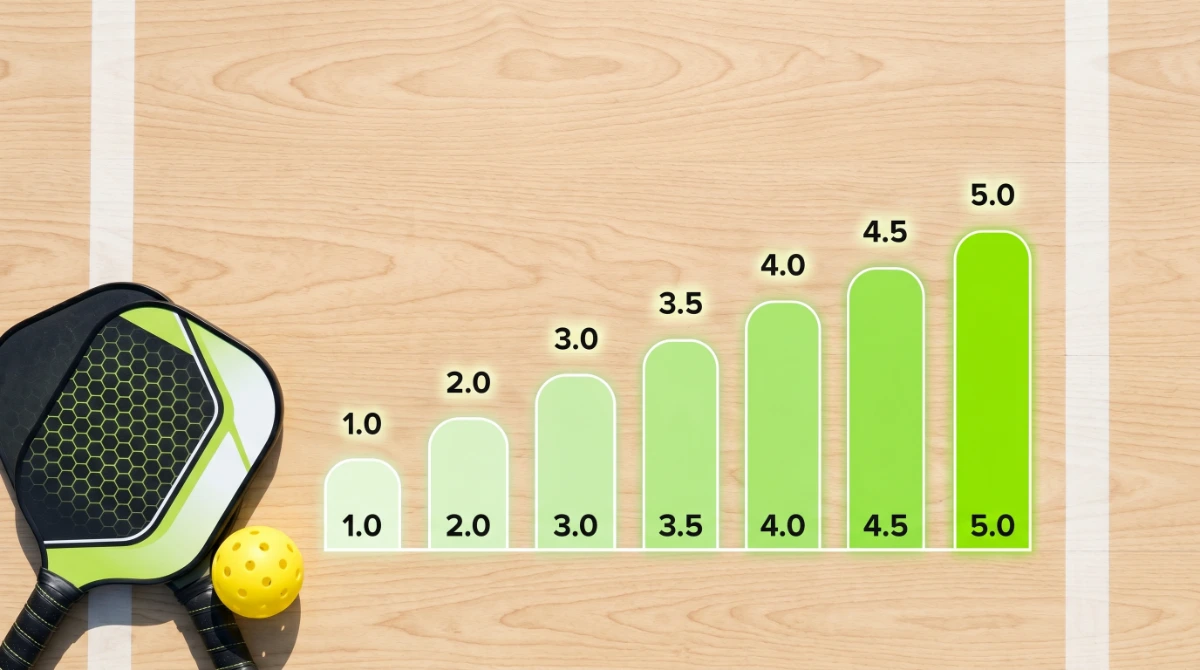
Pickleball Levels at a Glance (Quick‑Reference Table)
If you need a fast overview, this table captures the essence of each skill level.
| Level | Name | Typical Abilities |
|---|---|---|
| 1.0‑1.5 | Novice / Beginner | Learning rules, can hit a few balls, short rallies. |
| 2.0‑2.5 | Advanced Beginner | Consistent short rallies, basic dink, knows kitchen rule. |
| 3.0 | Intermediate | Directional control, deeper serves, consistent dinking, understands strategy. |
| 3.5 | Advanced Intermediate | Moves opponent, uses third‑shot drops, good footwork, can place volleys. |
| 4.0 | Advanced | Intentional shot variety, consistent spin, can reset points, tournament‑ready. |
| 4.5 | Expert | Dominates at net, high‑level anticipation, strong mental game. |
| 5.0+ | Professional | Mastered all skills, competes at national/pro level. |
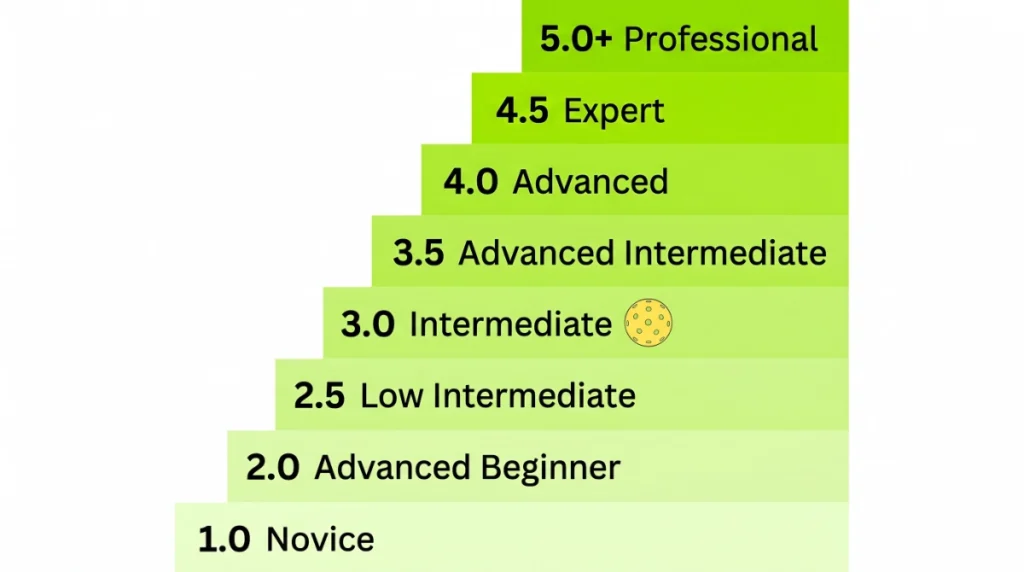
USAPA Pickleball Skill Levels (1.0‑5.0)
The USA Pickleball Association (USAPA) defines specific skills and knowledge for each level. (See the official USAPA skill level definitions for the full text.) These are used for tournaments, leagues, and self‑rating. Let’s break them down.
1.0 – Novice (Just Starting)
- You are new to pickleball.
- You understand the basic rules (serve, scoring, kitchen).
- You can hit the ball over the net occasionally.
- Rallies are very short.
1.5 – Beginner
- You can keep a short rally going.
- You are learning to serve consistently.
- You know where to stand on the court.
- You are starting to understand the two‑bounce rule.
2.0 – Advanced Beginner
- You can sustain a rally of 5‑10 shots.
- Your serve goes in most of the time.
- You are beginning to approach the kitchen line.
- You are learning to dink, but consistency is low.
2.5 – Low Intermediate
- You can dink with some control.
- You understand court positioning.
- Your serves are deeper and more accurate.
- You can hit forehand and backhand shots with moderate consistency.
3.0 – Intermediate (A Big Milestone)
- You can hit directional groundstrokes.
- Your dinking is consistent and you can move opponents.
- You understand the soft game and can reset points.
- You have a reliable serve and return.
- This is the most common recreational play level.
3.5 – Advanced Intermediate
- You use third‑shot drops effectively.
- You move your opponent around the court.
- You can hit volleys with control and placement.
- Your footwork is solid; you recover to the middle.
- You are starting to use spin intentionally.
4.0 – Advanced
- You have a full repertoire of shots: dinks, drives, drops, lobs.
- You can vary pace and spin to disrupt opponents.
- You play strategically, not just reactively.
- You are comfortable in tournament play.
- You rarely make unforced errors.
4.5 – Expert
- You dominate the kitchen line with quick hands.
- You anticipate shots exceptionally well.
- You can hit winners from anywhere.
- Your mental game is strong; you stay calm under pressure.
5.0+ – Professional
- You have mastered all physical and mental skills.
- You compete at the highest levels (nationals, pro tours).
- You train year‑round and coach others.
How DUPR, UTPR & Self‑Rating Compare to USAPA Pickleball Levels
While USAPA skill levels are the most common, you’ll encounter two other systems.
| System | Full Name | How It Works | Best For |
|---|---|---|---|
| USAPA Skill Levels | Self‑rating guidelines | You compare your skills to the definitions above and choose the level that matches. | Recreational play, local leagues |
| UTPR | USA Pickleball Tournament Player Rating | A computer‑generated rating based on tournament match results against rated players. | Tournament‑only players |
| DUPR | Dynamic Universal Pickleball Rating | A global rating system that includes recreational and tournament match results; updates after every match logged. | All players; used by many clubs and online platforms |
Each of these systems plays a different role in determining pickleball levels, so it helps to know when to use each one.
Which one should you use? For most recreational players, the USAPA self‑rating is perfect. If you play tournaments, your UTPR will be tracked automatically. DUPR is growing fast and is useful if you play at multiple venues that use it.
How to Determine Your Pickleball Level (Self‑Assessment)
The best way to find your level is to honestly compare your skills against the USAPA definitions. Here’s a simple checklist:
- Consistency: Can you keep a rally going for 10+ shots?
- Dinking: Can you dink cross‑court without popping the ball up?
- Serving: Do you place your serves deep and with control?
- Third‑shot drop: Can you execute it successfully in a game?
- Volleys: Are you quick at the net with placement?
- Footwork: Do you move efficiently and recover to the middle?
- Strategy: Do you actively move your opponent and change pace?
For a more precise result, try the interactive skill‑level tester I built. It asks you a few simple questions about your game and gives you your USAPA bracket instantly.
Interactive Skill‑Level Tester
I’ve embedded my free Skill Analyzer tool right here on PickleInsights. Answer 3 quick questions about your dinking, third‑shot drops, and court positioning, and it will tell you your current USAPA level plus a personalized improvement tip.
🎯 Skill Level Tester 📊
Answer 3 quick questions to find your USAPA rating.
How to Move Up Pickleball Levels (Progression Plan)
Everyone wants to improve. Here’s a focused plan for the most common transitions.
How to Go from 2.5 to 3.0 Pickleball Level
- Master the dink: Practice cross‑court dinking daily until you can hit 30 in a row.
- Deep serves: Aim for the back third of the service box.
- Learn to reset: When you’re out of position, hit a soft shot into the kitchen to slow the point down.
Steps to Advance from 3.0 to 3.5 Pickleball Level
- Add a third‑shot drop: Work on this until you can land it in the kitchen from the baseline.
- Improve footwork: Use shadow drills (ladder, shuffles) 10 minutes a day.
- Directional control: Hit forehands and backhands to specific targets, not just “in.”
Leveling Up: 3.5 to 4.0 Pickleball Level
- Develop spin: Practice topspin dinks and slice serves.
- Play tournaments: The pressure will expose your weaknesses so you can fix them.
- Video yourself: Watch your matches and note positioning errors.
Breaking Through: 4.0 to 4.5+ Pickleball Level
- Mental game: Stay calm and focused under pressure. Practice deep breathing between points.
- Shot variety: Intentionally mix dinks, drives, and lobs in every rally.
- Strength & conditioning: Off‑court fitness becomes a differentiator at higher levels.
Common Mistakes at Each Pickleball Level (And How to Fix Them)
I see these errors all the time when coaching players at each stage.
| Level | Common Mistake | How to Fix It |
|---|---|---|
| 2.5 | Popping up dinks | Shorten your swing, bend your knees, and lift with your legs. |
| 3.0 | Serving short | Aim deep and visualize a target near the baseline. |
| 3.5 | Not recovering to the middle | After every shot, hustle back to the center of the court. |
| 4.0 | Playing too passively | When you get a high ball, attack it. Don’t just push it back. |
| 4.5 | Overthinking | Trust your training. One point at a time. |
Download Your Free Skill‑Level Checklist & Tracker (PDF)
I created a one‑page PDF that includes a self‑assessment checklist, a skill‑level summary chart, and a progress tracker. Print it and check off your skills as you improve.
🏓 Skill‑Level Checklist & Tracker
Print or save – check off skills as you improve and see your level rise.
📋 Self‑Assessment Checklist
- Sustain a rally of 10+ shots consistently.
- Dink cross‑court without popping the ball up.
- Land my serves deep and with control.
- Execute a third‑shot drop from the baseline.
- Display quick, controlled volleys at the net.
- Recover to the middle after every shot.
- Move my opponent with intentional placement.
- Vary pace and spin effectively.
- Rarely make unforced errors under pressure.
- Feel comfortable playing in tournaments.
📈 Level Summary Chart
| 1.0‑1.5 | Novice |
| 2.0‑2.5 | Advanced Beginner |
| 3.0 | Intermediate |
| 3.5 | Advanced Intermediate |
| 4.0 | Advanced |
| 4.5 | Expert |
| 5.0+ | Professional |
📅 Progress Tracker
Date: _______ Current Level: _______ Goal Level: _______
Next Skills to Work On: ___________________________
Pickleball Levels FAQ
What are the different levels of pickleball players?
The USAPA defines levels from 1.0 (novice) to 5.0+ (professional). Most recreational players fall between 2.5 and 4.0.
How do I know what my pickleball level is?
Compare your skills to the USAPA definitions, use the self‑assessment checklist, or try the interactive skill‑level tester embedded in this guide.
What is a 3.0 pickleball player?
A 3.0 player has consistent groundstrokes and dinks, a reliable serve and return, understands basic strategy, and can sustain rallies of 10+ shots.
What is the difference between 3.5 and 4.0?
A 3.5 player uses third‑shot drops and moves opponents, while a 4.0 player has intentional shot variety, spin, and is tournament‑ready.
How do I move from 3.0 to 3.5?
Master your third‑shot drop, improve footwork, and practice directional control. Follow the progression plan in this guide.
What level should I play in a tournament?
Use the USAPA self‑rating guidelines or your UTPR/DUPR rating. When in doubt, play at the lower level and move up if you win easily.
Can you self‑rate in pickleball?
Yes, the USAPA encourages honest self‑rating using their skill level definitions. Many tournaments require a self‑rating.
What is the DUPR rating system?
DUPR is a dynamic rating that updates after every match you log, combining recreational and tournament results. It’s used globally.
✅ Pickleball Levels – Key Takeaways
- USAPA levels range from 1.0 (novice) to 5.0+ (professional).
- Most recreational players fall between 2.5 and 4.0.
- 3.0 is the most common intermediate milestone: consistent dinks, deep serves, and basic strategy.
- Self‑rate honestly using the USAPA definitions, the checklist, or the interactive tester in this guide.
- DUPR updates after every match; UTPR is tournament‑only; USAPA self‑rating is best for casual play.
- To move up a level: master one new skill at a time—start with dinks, then third‑shot drops, then spin.
- Download the checklist and use the skill‑level tester to find your starting point and track progress.
You’re Ready to Know Your Level
That humiliating 3.5 tournament where I won two points changed everything for me. I went home, printed the USAPA skill definitions, and circled every skill I couldn’t do yet. Turns out I was a 2.5 with a decent serve and a lot of wishful thinking. Admitting that was a relief. It meant I could stop pretending, start practicing the right things, and actually enjoy matches against people my own level.
As a referee and coach, I’ve handed that same checklist to hundreds of players since. I’ve watched 3.0 players proudly check off skills until they realized they’d become 3.5s without noticing. I’ve seen 4.0 players drop down, rebuild their confidence, and come back stronger than ever. Knowing your true level isn’t about judgment—it’s about finding your place and having a clear path to improvement.
Everything in this guide—the definitions, the progression plan, the self‑assessment—comes from real courts and real coaching sessions. I update it every year when USAPA releases new guidelines, so you can trust it’s current and tested. Bookmark it, download the checklist, and take the interactive self‑assessment. Then pick one thing from the progression plan and work on it this week.
Your next level is closer than you think. Now go claim it.
👉 Download the free level checklist
For more resources, read our Complete Pickleball Rules 2026 Guide or test your all‑around skill with the Free Skill Analyzer.
