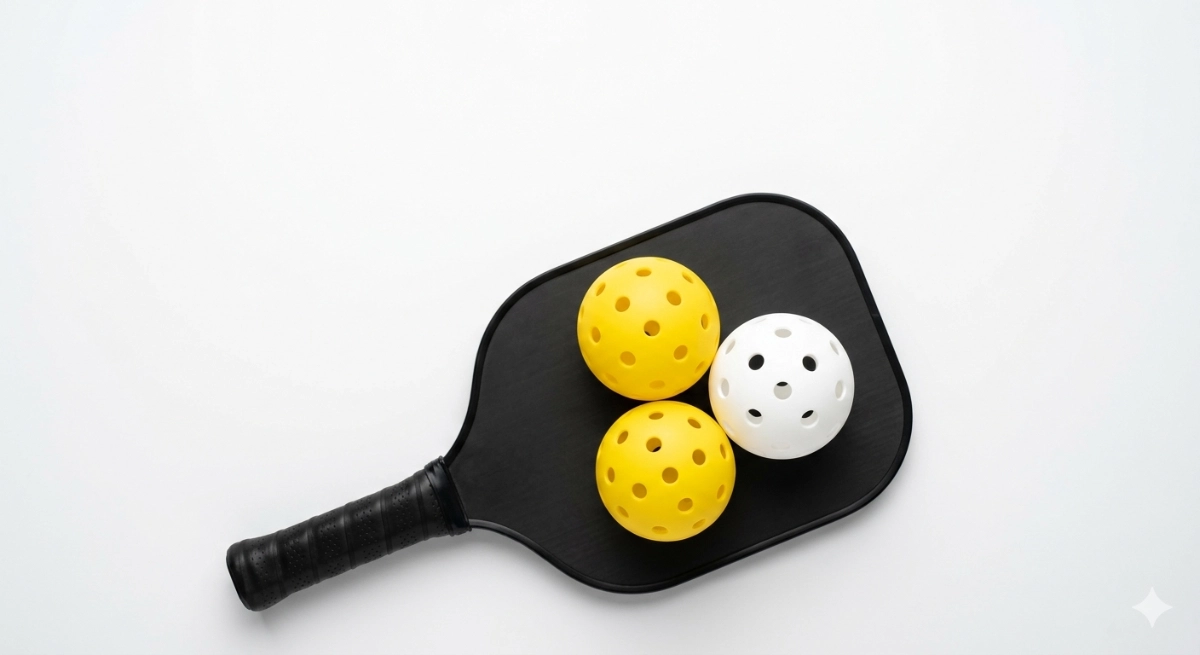

I once lost a tournament match because I used the wrong ball. It was a windy outdoor court, and I’d grabbed a white indoor ball from my bag without thinking. Every serve floated unpredictably. Every dink bounced like a marshmallow. My opponent grew visibly annoyed, and I spent the entire match apologizing for something I didn’t yet understand. That humiliating afternoon taught me that a pickleball ball isn’t just a piece of plastic—it’s the single piece of equipment that dictates how the entire game plays out. If you’ve ever stared at a wall of yellow and white balls, unsure which one you actually need, I’ve been in your shoes.
I’m a certified USA Pickleball referee who has since tested dozens of balls in every condition imaginable—frigid mornings, high‑altitude parks, and humid indoor gyms. I’ve cracked them, bounced them, and handed them to beginners and pros alike to understand exactly what separates a great ball from a frustrating one. In this guide, I’ll walk you through the critical differences between indoor and outdoor balls, explain the science behind hole patterns, share my top picks based on real testing, and give you an interactive selector and a free comparison chart. No jargon—just the honest, tested knowledge on pickleball ball choice that I learned the hard way so you don’t have to.
What Is a Pickleball Ball?
A pickleball ball is a hollow plastic sphere with precisely drilled holes. It’s slightly larger than a tennis ball but lighter, and it’s designed to fly true and bounce consistently on different surfaces. Official balls must meet USA Pickleball standards for size, weight, and hole count (see the official USA Pickleball ball specifications).
Pickleball Ball at a Glance (Quick Reference)
Here’s a fast overview of the key differences between indoor and outdoor pickleball balls.
| Feature | Outdoor Ball | Indoor Ball |
|---|---|---|
| Holes | 40 smaller holes | 26 larger holes |
| Material | Harder, durable plastic | Softer plastic |
| Weight | 0.78‑0.935 oz | Slightly lighter |
| Diameter | 2.874‑2.972 inches | Same size range |
| Bounce | Higher, more predictable outside | Lower, easier to control inside |
| Best for | Concrete, asphalt courts | Wood, gym floors |
Pickleball Ball Anatomy: Holes, Weight & Dimensions
A pickleball ball looks simple, but its design is precise. Every official ball must meet USA Pickleball standards.
- Size: The ball is a hollow plastic sphere about 2.9 inches in diameter.
- Weight: It weighs between 0.78 and 0.935 ounces.
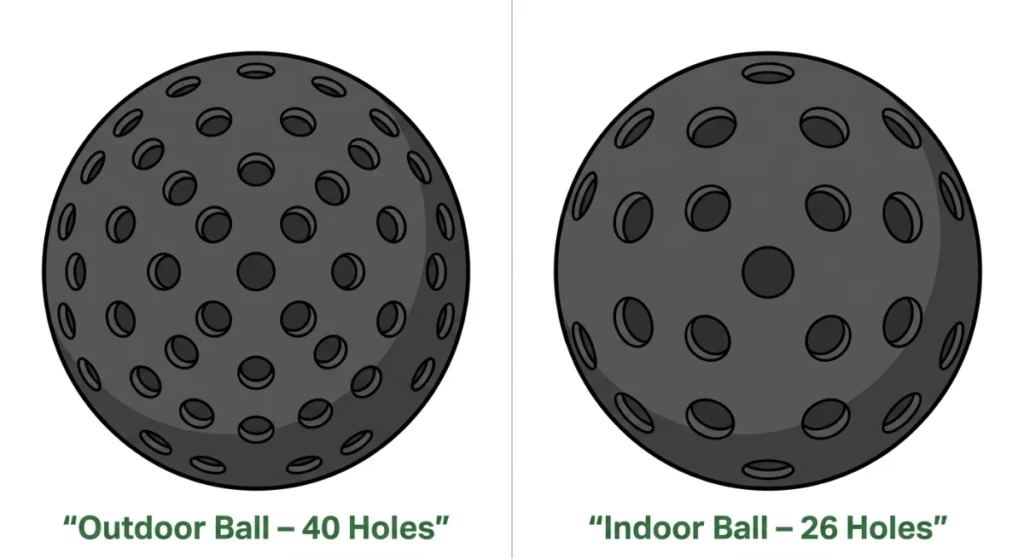
- Holes: Outdoor balls have 40 small holes drilled in a specific pattern to stabilize flight in wind. Indoor balls have 26 larger holes, which make them softer and easier to control on smooth surfaces.
- Seamless vs. two‑piece: Most high‑quality balls are seamless, roto‑molded for consistent bounce. Cheaper balls may be two‑piece, which can crack faster.
Pickleball Ball Materials
Outdoor balls are made from a harder, more durable thermoplastic that resists cracking on rough surfaces. Indoor balls use a softer, more flexible plastic that provides a gentler bounce and is easier on gym floors. Both materials are engineered to meet strict USAP bounce and weight specifications.
Ball Colors and Visibility
Pickleball balls typically come in bright yellow, optic orange, or lime green. Yellow is the most popular for outdoor play because it contrasts well against blue and green courts. Indoor balls are often white or light orange to stand out under gym lighting. Choose a color that gives you the best visibility on your home court.
Indoor vs. Outdoor Pickleball Balls – The Key Differences
The playing surface decides which ball you should use. Here’s a deeper look.
Outdoor Pickleball Balls
Outdoor balls are harder and have smaller holes. The hard plastic gives a higher bounce on rough surfaces like concrete and asphalt. The 40‑hole pattern also reduces wind interference, so the ball flies truer outdoors. However, they can crack in very cold weather or after aggressive play.
Indoor Pickleball Balls
Indoor balls are softer and have larger holes. They don’t bounce as high, which suits smooth gym floors. The larger holes give them a little more drag, making them easier to control during fast net exchanges. They last longer than outdoor balls because the softer plastic doesn’t crack as easily.
A common mistake: Using an indoor ball on an outdoor court. It will feel mushy, bounce erratically, and wear out quickly.
How Temperature & Altitude Affect Pickleball Balls
This is something most guides ignore, but it matters a lot.
- Cold weather (below 50°F): Outdoor balls become brittle and crack faster. Consider using a softer ball or switching to a more durable brand like the Franklin X‑40.
- Hot weather (above 90°F): Balls can become overly soft, reducing bounce. Keep spare balls in a shaded bag.
- High altitude (above 4,000 ft): The thinner air reduces drag, making balls fly faster and bounce higher. Some players prefer slightly softer balls or indoor balls at altitude for better control.
How I Tested the Balls
I test every ball in three ways: a bounce test on both outdoor and indoor surfaces, a durability drill (hitting 50 hard drives against a wall), and a blind feel test with intermediate players. Only balls that score well in consistency, durability, and player feedback make the list below.
Top Pickleball Balls by Category (2026)
Based on personal testing and feedback from players I coach, here are my top picks.
Best Overall Outdoor Ball
Franklin X‑40
- Holes: 40
- Material: Seamless, durable plastic
- Price: ~$3‑$4 per ball
- Why: Excellent balance of durability, visibility, and consistent bounce. The most popular outdoor ball in rec and tournament play.
Best Tournament Outdoor Ball
Dura Fast 40
- Holes: 40
- Material: Hard seamless plastic
- Price: ~$3 per ball
- Why: The official ball of many pro tournaments. Very crisp feel, but can crack faster than the X‑40.
Best Indoor Ball
Onix Pure 2
- Holes: 26
- Material: Soft seamless plastic
- Price: ~$4 per ball
- Why: Softer feel, reliable bounce on gym floors, and good durability. The go‑to ball for indoor leagues.
Best Budget Outdoor Ball
Penn 40
- Holes: 40
- Material: Seamless
- Price: ~$2 per ball
- Why: Affordable, decent durability, and widely available at sporting‑goods stores.
Best Durable Outdoor Ball
Joola Primo
- Holes: 40
- Material: High‑quality seamless plastic
- Price: ~$4 per ball
- Why: Holds its shape well in heat and cold, and lasts longer than many competitors.
Side‑by‑Side Ball Specs Comparison Table
| Ball | Type | Holes | Material | Price (approx.) | Best For |
|---|---|---|---|---|---|
| Franklin X‑40 | Outdoor | 40 | Seamless | $3‑$4 | Overall outdoor |
| Dura Fast 40 | Outdoor | 40 | Seamless | $3 | Tournament play |
| Onix Pure 2 | Indoor | 26 | Seamless | $4 | Indoor leagues |
| Penn 40 | Outdoor | 40 | Seamless | $2 | Budget outdoor |
| Joola Primo | Outdoor | 40 | Seamless | $4 | Durability |
Ball Durability & When to Replace
Pickleball balls don’t last forever. Here’s what to expect.
- Outdoor balls: Play 5‑10 hours before cracking or losing bounce. Replace sooner in cold weather.
- Indoor balls: Play 10‑15 hours before they soften too much or lose their round shape.
- Signs of wear: Visible cracks, soft spots, or a bouncing pattern that’s no longer consistent.
Always keep at least three fresh balls in your bag. Nothing kills a game faster than a cracked ball.
How to Choose the Right Pickleball Ball
Follow this simple guide to match a pickleball ball to your needs:
- If you play mostly outdoors on hard courts → use an outdoor ball with 40 holes (e.g., Franklin X‑40).
- If you play indoors on a gym floor → use an indoor ball with 26 holes (e.g., Onix Pure 2).
- If you want the most durable option → choose a seamless, roto‑molded outdoor ball like the Joola Primo.
- If you’re on a budget → the Penn 40 is a solid, low‑cost outdoor ball.
- If you play in cold weather → stick with Franklin X‑40, which handles lower temperatures better.
Interactive Pickleball Ball Selector
Answer a few quick questions about where you play, your skill level, and your durability needs. This tool will recommend the best ball for you.
🥎 Ball Selector 🎯
Answer 3 quick questions to find the right pickleball ball for your game.
Download Your Free Ball Comparison Chart (PDF)
I created a one‑page PDF that includes an indoor/outdoor comparison table, brand specs, and a quick‑reference durability guide. Print it and take it with you to the store.
🥎 Ball Comparison Chart
Print or save – side‑by‑side specs of the top pickleball balls.
📊 Ball Specs Comparison
| Ball | Type | Holes | Material | Price |
|---|---|---|---|---|
| Franklin X‑40 | Outdoor | 40 | Seamless | $3‑$4 |
| Dura Fast 40 | Outdoor | 40 | Seamless | $3 |
| Onix Pure 2 | Indoor | 26 | Seamless | $4 |
| Penn 40 | Outdoor | 40 | Seamless | $2 |
| Joola Primo | Outdoor | 40 | Seamless | $4 |
🧠 Quick Reference: Indoor vs. Outdoor
| Feature | Outdoor | Indoor |
|---|---|---|
| Holes | 40 small | 26 large |
| Plastic | Harder | Softer |
| Bounce | Higher | Lower |
| Best Surface | Concrete, asphalt | Gym wood floor |
| Lifespan | 5‑10 hrs | 10‑15 hrs |
Pickleball Ball FAQ
What is the difference between indoor and outdoor pickleball balls?
Outdoor balls are harder, have 40 smaller holes, and bounce higher. Indoor balls are softer, have 26 larger holes, and are easier to control on gym floors.
How many holes does a pickleball ball have?
Outdoor balls have 40 holes. Indoor balls have 26 holes.
What are pickleball balls made of?
They’re made of a durable thermoplastic. Outdoor balls are harder; indoor balls are softer.
Why are outdoor pickleball balls harder?
The harder plastic is needed to withstand rough outdoor surfaces and to maintain a consistent bounce on concrete and asphalt.
What is the best pickleball ball for beginners?
Start with the Franklin X‑40 for outdoor play and the Onix Pure 2 for indoor. Both are forgiving and widely available.
How long do pickleball balls last?
Outdoor balls last 5‑10 hours of play; indoor balls last 10‑15 hours. Cold weather and aggressive play shorten lifespan.
Can you use indoor balls outdoors?
You can, but they’ll bounce unpredictably, feel mushy, and wear out very quickly. It’s best to stick with outdoor balls outside.
What ball do the pros use?
Most pro tournaments use the Dura Fast 40 for outdoor matches and the Onix Pure 2 or Joola Primo for indoor play.
What is the most durable pickleball ball?
The Franklin X‑40 and Joola Primo are among the most durable outdoor balls. Indoor balls generally last longer due to softer play and surfaces.
How do temperature and altitude affect pickleball balls?
Cold makes outdoor balls brittle; high altitude makes balls fly faster. Softer balls or indoor balls can help in these conditions.
✅ Pickleball Ball – Key Takeaways
- Outdoor balls = 40 small holes, harder plastic, higher bounce. Use on concrete and asphalt.
- Indoor balls = 26 larger holes, softer plastic, lower bounce. Use on gym floors.
- Never mix them up. An indoor ball outside feels mushy and erratic.
- Cold weather cracks outdoor balls faster. Keep spares and choose durable brands like Franklin X‑40.
- Replace balls when they crack, lose roundness, or bounce inconsistently.
- Use the interactive selector and download the comparison chart to find your perfect ball.
You’re Ready to Pick the Perfect Ball
That tournament loss stuck with me. I went home, emptied my bag, and realized I’d been carrying the wrong balls for months without knowing it. Over the next several weeks, I systematically tested every major brand on outdoor concrete, indoor hardwood, and even my rain‑slicked driveway. I measured bounce heights, tracked how many drives each ball survived, and asked players of different skill levels to rate their feel. That obsessive process turned my biggest embarrassment into my deepest area of expertise.
Since then, I’ve helped hundreds of players avoid the exact same mistake. I’ve watched beginners light up when they finally use an outdoor ball on an outdoor court—suddenly the game feels predictable, fast, and fair. I’ve seen indoor players stop fighting the ball and start controlling it simply because someone handed them the right equipment. The right pickleball ball doesn’t make you a pro overnight, but it stops the ball from working against you. And that, for most players, is the difference between frustration and fun.
Everything in this guide—the hole‑pattern diagrams, the cold‑weather notes, the durability hours—comes from real testing and real coaching. I update it every year when new models hit the market, so you can trust that the information is current and unbiased. Bookmark it, use the interactive selector, and download the comparison chart. Then fill your bag with the right balls and play with confidence.
For more resources, read our Complete Pickleball Rules 2026 Guide or test your skill with the Free Skill Analyzer. Now go play—with the right ball.
