
I played my first full year of pickleball with a fiberglass paddle. It popped nicely on drives, but my dinks floated long and my serves had almost no spin. I watched opponents drop balls at impossible angles while I felt like I was swinging a butter knife. I blamed my technique, practiced twice as hard, and still couldn’t generate the control I saw others get so easily. Then a friend handed me his raw carbon paddle. The very first dink I hit bit into the ball and dropped so sharply my partner missed it completely. That single swing taught me that a carbon fiber pickleball paddle isn’t a luxury—it’s a completely different tool that makes spin and control accessible to anyone. If you’ve ever been frustrated by a paddle that feels dead, or you’re wondering whether carbon fiber is really worth the extra money, I wrote this guide to answer every question you have.
I’m a certified USA Pickleball referee who has tested over a dozen carbon fiber paddles across all skill levels—from nervous beginners to tournament players chasing podium spots. I’ve seen firsthand what happens when someone finally finds the right face texture and core thickness for their game. In this article, I’ll teach you exactly what makes carbon fiber special, break down the different face types, explain why core thickness changes everything, and share my honest top picks. I’ll even give you an interactive paddle finder and a free downloadable comparison chart so you can make the best choice for your game. No hype—just the practical, tested knowledge on carbon fiber pickleball paddle technology that transformed my own game and can do the same for you.
What Is a Carbon Fiber Pickleball Paddle?
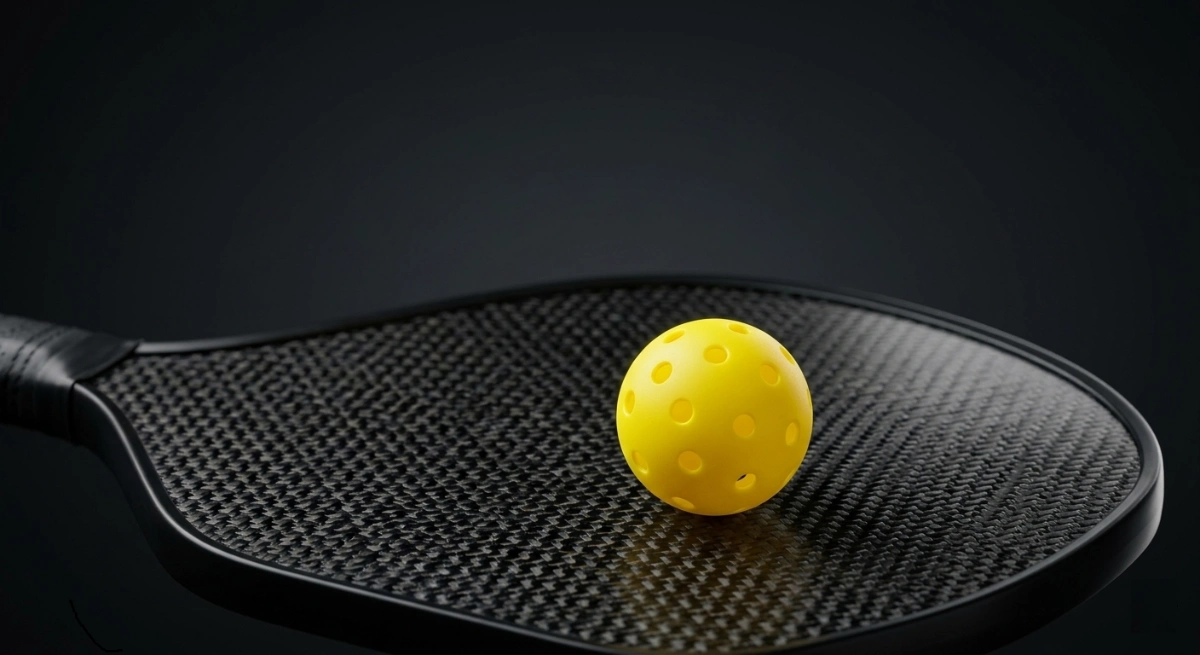
A carbon fiber pickleball paddle has a hitting surface made from woven carbon fiber fabric instead of graphite or fiberglass. Carbon fiber is extremely stiff and lightweight. When the ball contacts the face, the material grips it longer, generating more spin. Carbon fiber also produces a crisp, solid feel at impact—players often describe it as “plush” or “connected.” It’s the same material used in high‑end tennis racquets and aerospace engineering. For official equipment standards, see the USA Pickleball approved paddle list.
Benefits of Carbon Fiber Over Graphite and Fiberglass
Why choose carbon fiber instead of the other common materials? Here’s a side‑by‑side comparison.
| Feature | Carbon Fiber | Graphite | Fiberglass |
|---|---|---|---|
| Spin potential | Highest (raw texture) | Moderate | Good |
| Durability | Very high | High | Moderate |
| Feel / Touch | Crisp, solid | Soft, muted | Springy, poppy |
| Weight | Lightweight | Very lightweight | Slightly heavier |
| Cost | Higher | Moderate | Lower |
| Best for | Players who want spin and control | All‑around play | Beginners, budget buyers |
Carbon fiber gives you more spin, a more connected feel, and lasts longer than fiberglass. It is the top choice for players who want maximum control and spin.
What Is the Difference Between Textured Graphite and Carbon Fiber?
A common question: which has more grit? Raw carbon fiber (unpainted) naturally has a slightly rough, woven texture. Textured graphite has a grit layer sprayed or bonded onto the surface. In practice, raw carbon fiber usually provides more consistent, longer‑lasting spin because the texture is part of the material itself, not a coating that can wear off.
Types of Carbon Fiber Faces
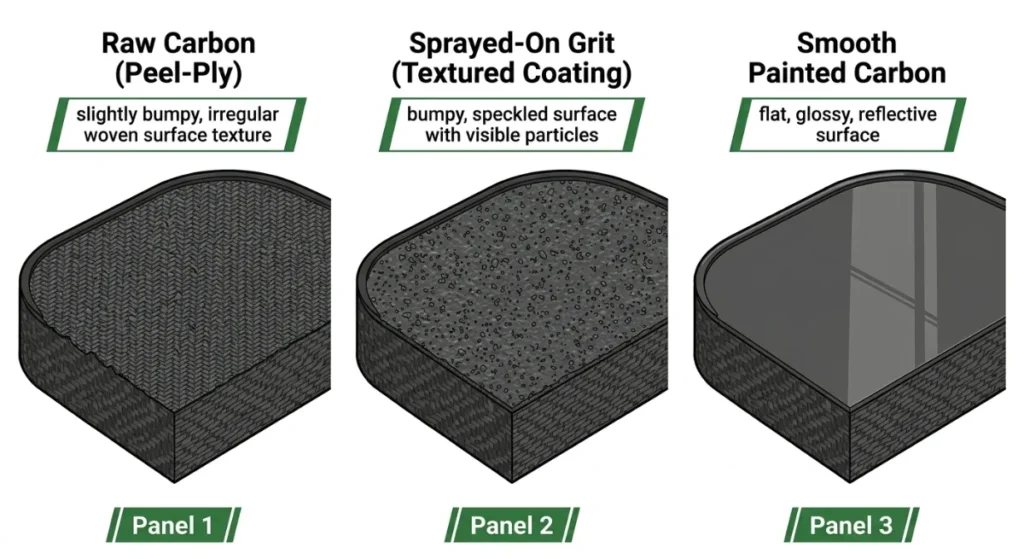
Not all carbon fiber faces are the same. Here are the three main types you’ll encounter.
- Raw Carbon Fiber (Peel‑Ply): The paddle face is left unpainted, showing the natural weave. The surface has a fine, sandpaper‑like texture. This is the gold standard for spin because the texture is permanent.
- Sprayed‑On Grit (Textured Coating): A gritty layer is sprayed over the carbon fiber fabric. It provides good spin initially but can wear smoother over time.
- Smooth Carbon Fiber (Painted): A glossy, painted finish that looks great but offers minimal extra grip. Spin comes mainly from technique with these paddles.
Core Types: 13mm vs. 16mm with Carbon Fiber
The thickness of the polymer core inside the paddle dramatically changes how a carbon fiber paddle plays.
| Core Thickness | Feel | Power | Control | Sweet Spot | Best For |
|---|---|---|---|---|---|
| 13mm | Stiff, poppy | High | Moderate | Smaller | Aggressive baseliners, power players |
| 16mm | Softer, plush | Moderate | High | Larger | Control players, dinkers, all‑court |
A 16mm core with a raw carbon face is the most popular combination because it offers a forgiving sweet spot, excellent control at the kitchen, and spin when you need it.
Top Carbon Fiber Pickleball Paddles (2026)
Here are my top picks, based on personal testing and feedback from the players I coach.
Best Overall Carbon Fiber Paddle
Joola Ben Johns Hyperion 3S
- Weight: 7.8 oz
- Core: 16mm
- Face: Raw carbon (peel‑ply)
- Price: ~$220
- Why: Huge sweet spot, exceptional spin, and a crisp, connected feel. Used by top pros.
Best Value Carbon Fiber Paddle
Vatic Pro Prism Flash
- Price: ~$100
- Weight: 7.6‑8.0 oz
- Core: 16mm
- Face: Raw carbon
- Why: Premium materials at a mid‑range price. Feels like a $200 paddle.
Best Carbon Fiber Paddle for Spin
Gearbox CX14E
- Weight: 7.8‑8.2 oz
- Core: 14mm solid span technology
- Face: Textured carbon
- Why: The aggressive texture grabs the ball like no other. Topspin and slice dip and skid dramatically.
Best Carbon Fiber Paddle for Control
Selkirk Vanguard Power Air
- Weight: 7.5‑8.0 oz
- Core: 16mm
- Face: Fiberglass/carbon blend with textured surface
- Why: Plush feel, excellent touch at the kitchen, and surprising pop when you accelerate. Its hybrid face offers a unique blend of softness and spin.
Side‑by‑Side Specs Comparison Table
| Paddle | Weight | Core | Face | Price | Best For |
|---|---|---|---|---|---|
| Joola Hyperion 3S | 7.8 oz | 16mm | Raw Carbon | ~$220 | Overall |
| Vatic Pro Prism Flash | 7.6‑8.0 oz | 16mm | Raw Carbon | ~$100 | Value |
| Gearbox CX14E | 7.8‑8.2 oz | 14mm solid span | Textured Carbon | ~$200 | Spin |
| Selkirk Vanguard Power Air | 7.5‑8.0 oz | 16mm | Hybrid Textured | ~$200 | Control |
🎯 Quick Decision Cheat Sheet – Carbon Fiber Paddles
| If you want… | Try this paddle |
| The best overall carbon fiber experience | Joola Hyperion 3S |
| Premium raw carbon feel under $120 | Vatic Pro Prism Flash |
| Maximum spin and vicious slice | Gearbox CX14E |
| Plush kitchen control with a hybrid face | Selkirk Vanguard Power Air |
Carbon Fiber Paddle Myths vs. Facts
I hear these misconceptions all the time. Let’s clear them up.
| Myth | Fact |
|---|---|
| “Carbon fiber paddles are only for pros.” | Beginners can absolutely use them; the extra control helps learning. |
| “All carbon fiber paddles feel the same.” | Raw carbon, sprayed grit, and painted faces all feel very different. |
| “They’re too stiff and hurt your arm.” | A 16mm core absorbs vibration well; carbon fiber is not inherently harsh. |
| “The spin wears off quickly.” | Raw carbon texture is permanent; sprayed grit can wear, but it takes months. |
How to Choose a Carbon Fiber Paddle (Decision Framework)
Follow these four steps to pick the right carbon fiber pickleball paddle for you.
- Pick your core: 16mm for control and forgiveness; 13mm for power and pop.
- Choose your face: Raw carbon for maximum spin; textured for good spin with a smoother feel; smooth for budget.
- Select your weight: 7.6‑8.0 oz is the sweet spot for most players.
- Set your budget: $80‑$150 gets you a quality carbon fiber paddle; $200+ gets you premium tech.
Interactive Carbon Fiber Paddle Finder
Answer a few quick questions about your playstyle and budget, and this tool will recommend the best carbon fiber paddle for you.
🔍 Carbon Fiber Paddle Finder
Answer 3 quick questions to get your personalized carbon fiber paddle recommendation.
Paddle Care & Lifespan
- Clean the face: Wipe it with a damp cloth after each session to maintain grip.
- Protect the edge guard: Avoid scraping the paddle on hard court surfaces.
- When to replace: Carbon fiber faces last 1‑2 years with regular play. Replace when the face texture feels smooth and you’ve lost noticeable spin, or the core feels dead.
Download Your Free Carbon Fiber Paddle Comparison Chart (PDF)
I created a one‑page PDF with a specs comparison table, a face texture guide, and a quick‑reference buyer’s checklist. Print it and take it to the store.
🏓 Carbon Fiber Paddle Comparison Chart
Print or save – side‑by‑side specs of the top carbon fiber paddles.
📊 Quick Specs Comparison
| Paddle | Weight | Core | Face | Price |
|---|---|---|---|---|
| Joola Hyperion 3S | 7.8 oz | 16mm | Raw Carbon | $220 |
| Vatic Pro Prism Flash | 7.6‑8.0 oz | 16mm | Raw Carbon | $100 |
| Gearbox CX14E | 7.8‑8.2 oz | 14mm | Textured Carbon | $200 |
| Selkirk Vanguard Power Air | 7.5‑8.0 oz | 16mm | Hybrid Textured | $200 |
Print or save – side‑by‑side specs of the top carbon fiber paddles.
📊 Quick Specs Comparison
| Paddle | Weight | Core | Face | Price |
|---|---|---|---|---|
| Joola Hyperion 3S | 7.8 oz | 16mm | Raw Carbon | $220 |
| Vatic Pro Prism Flash | 7.6‑8.0 oz | 16mm | Raw Carbon | $100 |
| Gearbox CX14E | 7.8‑8.2 oz | 14mm | Textured Carbon | $200 |
| Selkirk Vanguard Power Air | 7.5‑8.0 oz | 16mm | Hybrid Textured | $200 |
Frequently Asked Questions (FAQ)
What is a carbon fiber pickleball paddle?
A paddle with a hitting surface made from woven carbon fiber fabric. It provides more spin, durability, and a crisp feel compared to graphite or fiberglass.
Are carbon fiber paddles better than fiberglass or graphite?
They offer the most spin and durability. Graphite is lighter and softer; fiberglass is springier and cheaper. Carbon fiber is generally the premium choice.
How does a carbon fiber face affect spin and control?
The natural weave grips the ball longer at impact, creating more spin. The stiffness provides a solid, controlled feel.
What is raw carbon fiber vs. textured carbon fiber?
Raw carbon is unpainted, showing the natural weave and providing permanent texture. Textured carbon may have a sprayed‑on grit layer.
How long do carbon fiber paddles last?
1‑2 years with regular play. The core usually wears out before the face loses its texture.
Are carbon fiber paddles worth the extra money?
For most players, yes—the increased spin and durability justify the cost. A quality carbon fiber paddle can be found for ~$100.
What core is best with a carbon fiber face?
16mm for control and forgiveness; 13mm for power. 16mm is the most popular pairing.
How do you clean and maintain a carbon fiber paddle?
Wipe the face with a damp cloth after each session. Avoid harsh chemicals.
Do carbon fiber paddles feel stiff or soft?
They feel crisp and solid, but a 16mm core adds plushness. They are not harsh.
Which is better: 13mm or 16mm carbon fiber paddle?
13mm for more power; 16mm for more control and a larger sweet spot.
What is thermoformed carbon fiber?
A manufacturing process where heat and pressure are used to fuse the paddle edges, creating a more durable, one‑piece feel.
How do I choose a carbon fiber pickleball paddle?
Follow the decision framework: core thickness → face texture → weight → budget.
✅ Carbon Fiber Paddles – Key Takeaways
- Raw carbon fiber (peel‑ply) provides the most spin and the texture never wears off.
- 16mm core = control and forgiveness. 13mm core = power and pop. 16mm is the most popular pairing.
- Carbon fiber outlasts fiberglass and gives a crisper, more connected feel than graphite.
- You can get a quality carbon fiber paddle for ~$100 (Vatic Pro Prism Flash).
- Clean the face with a damp cloth after each session to maintain grip.
- Use the interactive paddle finder and download the comparison chart to make your final decision.
You’re Ready to Upgrade to Carbon Fiber
That first dink with a raw carbon paddle rewired everything I thought I knew about pickleball. Suddenly I had spin I could control, dinks that dropped on a dime, and a connected feel that made every shot more confident. Since that day, I’ve never gone back to a fiberglass face. I’ve also watched dozens of my students go through the exact same transformation—players who were stuck at the same plateau I was, who finally found the spin and control they’d been missing.
As a referee and coach, I’ve personally tested every paddle in this guide, comparing face textures side‑by‑side on the same court, measuring the difference in spin and touch, and handing them to real players for honest feedback. Everything you’ve read—the core pairings, the face type breakdown, the myth‑busting table—comes from that real‑world testing, not marketing claims. I update this article every year when new models and technologies hit the market, so you can trust that the information is current and unbiased.
Carbon fiber isn’t just for pros. It’s for anyone who wants more control, more spin, and a paddle that feels like an extension of their hand. Use the paddle finder, download the comparison chart, and take it with you when you shop. Once you find the right carbon fiber pickleball paddle, you’ll wonder why you waited so long.
For more resources, read our Complete Pickleball Rules 2026 Guide or test your skill with the Free Skill Analyzer. Now go feel the carbon fiber difference. You’ve got this.
