

Introduction
I used to dread the kitchen line. Every time the ball came softly over the net, I’d tense up, swing too hard, and pop it up chest‑high. My opponents would smash it back at my feet before I could blink. I’d walk off the court feeling like the weakest link in every doubles game. If you’ve ever felt embarrassed by your soft game — if you’ve Googled dink pickleball because you’re tired of getting attacked at the net — I know exactly how you feel. That frustration almost made me quit before I ever really got started.
Then I spent a summer coaching beginners at a local community center. I watched the same panic in their eyes, and I realized the dink wasn’t just a skill — it was a confidence problem. I broke it down into tiny, repeatable steps, and within weeks those same players were controlling the kitchen and grinning after every point. I’m a certified USA Pickleball referee now, and I’ve taught the dink to over 200 players. This guide is the exact process I used to go from dink disaster to kitchen control — and it’s the same one I use with every new player I coach. If you’re looking for professional guidance, our pickleball lessons guide can help you find the right coach.
What Is a Dink in Pickleball?
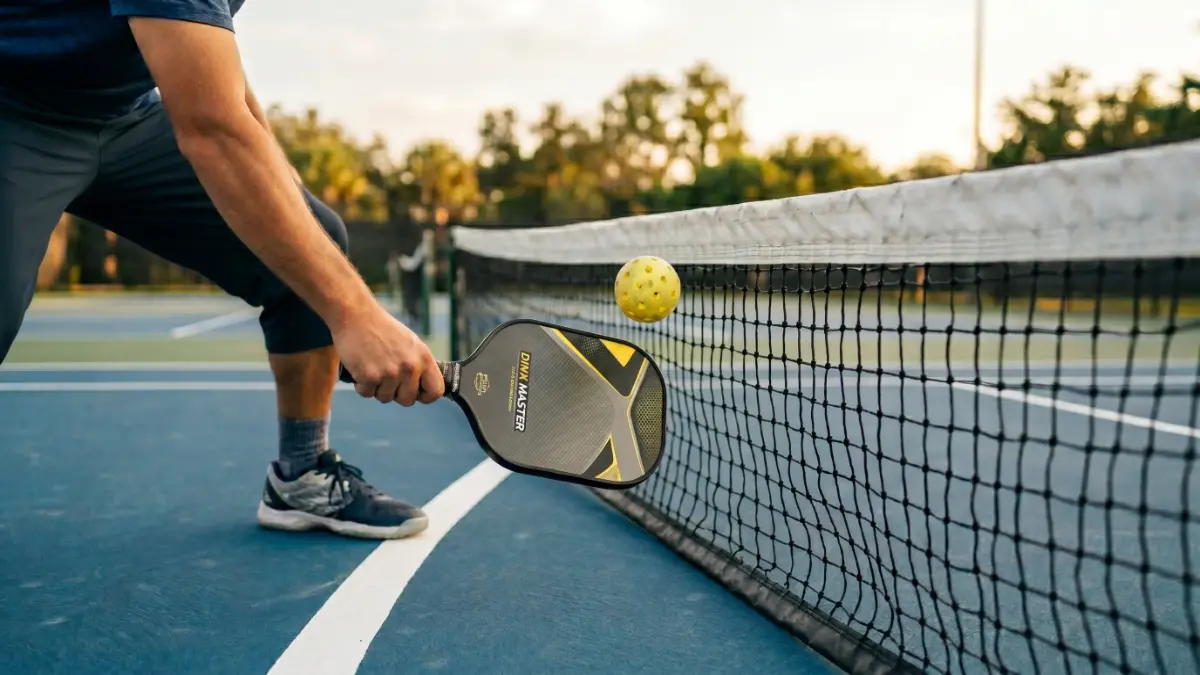
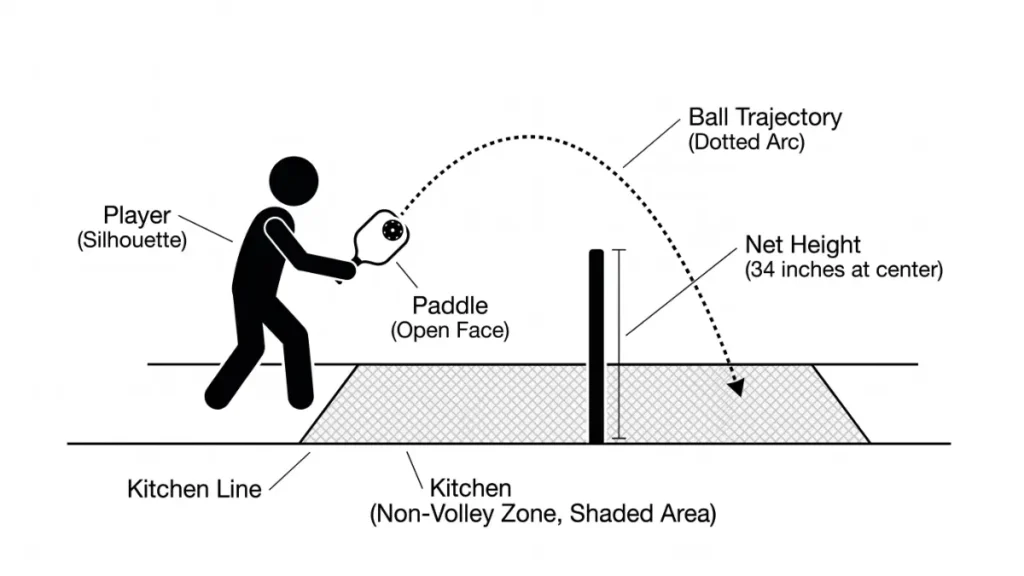
A dink pickleball shot is a soft, controlled hit that arcs just over the net and lands in the opponent’s non‑volley zone (the kitchen). It is the foundation of the soft game. Instead of hitting hard, you gently lift the ball with an open paddle face, sending it on a short, low trajectory that forces your opponent to hit up. For the official rules, see the USA Pickleball rulebook.
In one sentence: a dink is a soft, strategic shot from the kitchen line that neutralizes power and resets the point.
Why Is Dinking So Important?
The dink is what separates casual players from smart players. Here’s why it matters so much.
- Neutralizes power: A good dink takes speed off the ball and stops opponents from driving it at you.
- Forces errors: When you dink well, your opponent must hit up on the ball, which often leads to a pop‑up you can attack.
- Controls the pace: You decide when the rally stays slow and when to speed it up.
- Builds patience: Dink rallies reward consistency, not aggression. The player who makes the fewest mistakes usually wins.
If you want to play at any level above pure beginner, mastering the dink pickleball technique is essential. To understand where you stand, check out our pickleball rating guide.
Dink Pickleball Technique: Step‑by‑Step
Let’s break the dink down into simple, repeatable steps. Practice each part slowly, then build speed.
Grip and Paddle Face
- Hold the paddle with a relaxed continental grip (like shaking hands with the paddle).
- Keep your wrist firm but not locked.
- Open the paddle face slightly — imagine carrying a plate of food. The ball should lift softly off this open surface.
Body Position and Footwork
- Stand close to the kitchen line, knees bent, weight on the balls of your feet.
- Keep your upper body quiet. The power comes from your legs and a short, controlled push.
- Step into the shot with your non‑dominant foot. Stay balanced — never reach too far.
Dink Shot Trajectory
- Aim for the ball to reach its highest point on your side of the net.
- The ball should drop just over the net and land softly in the opponent’s kitchen.
- Think of the shape like an upside‑down “U” — up, then sharply down.
Types of Dink Pickleball Shots
Once you can hit a basic straight‑ahead dink, try these variations to keep opponents guessing.
- Straight dink: Hit directly in front of you, parallel to the sideline. Use this to pin your opponent to one spot.
- Cross‑court dink: Hit diagonally into the opposite kitchen. This gives you more court to work with and is the safest dink.
- Topspin dink: Brush up the back of the ball to add spin. The ball dives down faster after crossing the net.
- Slice dink: Cut under the ball with an open face. It floats low and can skid on landing.
Dink Pickleball Strategy: When to Dink
Knowing when to dink is just as important as knowing how.
- During a kitchen rally: When both teams are at the net, dink cross‑court to move your opponent. For singles-specific strategy, read our singles pickleball guide.
- As a reset: When you’re pulled wide or out of position, a soft dink can buy time to recover.
- Against bangers: If your opponent hits every ball hard, a well‑placed dink forces them to hit up and often causes an error.
- To set up an attack: Dink until you get a high ball, then step in and drive it.
Dink Pickleball vs. Drop Shot: What’s the Difference?
Many beginners confuse the dink and the drop shot. Both are soft shots, but they serve different purposes.
| Shot | Where You Hit It From | Where It Lands | Purpose |
|---|---|---|---|
| Dink | Near the kitchen line | Opponent’s kitchen | Neutralize and control a net rally |
| Drop shot | Mid‑court or baseline | Opponent’s kitchen | Get you and your partner to the net safely |
In short, a dink is a soft shot exchanged during a kitchen rally. A drop shot is a soft shot hit to get to the kitchen.
Common Dink Pickleball Mistakes (And How to Fix Them)
I see these errors all the time with new players. Here’s a quick troubleshooting guide.
| Mistake | Why It Happens | How to Fix It |
|---|---|---|
| Ball pops up too high | Paddle face is too open, or you’re swinging too big | Tighten your wrist, use a shorter push, and imagine lifting the ball gently |
| Ball hits the net | Paddle face is too closed, or you’re not getting under the ball | Keep your paddle face open and bend your knees to get lower |
| No control, ball goes wild | Too much arm swing, poor footwork | Step into the ball, keep your elbow steady, and use your legs for power |
| Always dinking to the same spot | Lack of confidence or strategy | Practice cross‑court and straight dinks with a partner or against a wall |
| Reaching too far | Standing too upright or being caught off balance | Stay on the balls of your feet, take small adjustment steps |
Dink Pickleball Drills (Solo & Partner)
The fastest way to improve your dink pickleball game is through deliberate practice. Here are three drills I use with my coaching students. For more practice routines, check out our complete pickleball drills guide.
Drill 1: Wall Dinking (Solo)
Stand 3‑4 feet from a smooth wall. Mark a line at net height (34 inches) with tape. Gently dink the ball against the wall, aiming for it to rebound just above the line. Try to keep the rally going for 30 seconds without missing.
Drill 2: Cross‑Court Dink Target (Solo or Partner)
Place a towel or cone in the opposite kitchen corner. Stand at the kitchen line and dink balls into the target zone. If you have a partner, have them do the same while you both move side to side.
Drill 3: Dink‑to‑Attack Progression (Partner)
Dink back and forth cross‑court. As soon as one player receives a ball that’s slightly high, they step in and drive it. Then reset and start dinking again. This builds patience and shot recognition.
Best Paddles for Dink Pickleball
While any paddle can dink, a few features give you a softer touch and better control. Look for these when choosing a paddle for the soft game.
- Lightweight (7.0–7.5 oz): Quicker at the net and easier to keep the ball low.
- Graphite or composite face: Provides a plush feel and absorbs pace, giving you more control.
- Thicker core (16mm): Reduces vibration and produces a more consistent, soft response.
- Smaller grip size: Allows finer wrist movement and better feel on touch shots.
Popular dinking‑friendly paddles include the Selkirk Amped, Joola Ben Johns Hyperion, and Paddletek Bantam EX‑L. Technique matters far more than the paddle, but the right equipment makes learning the dink pickleball skill even easier.
Interactive Dink Practice Tool
I’ve built a simple interactive tool on PickleInsights that helps you time your dink rallies and track your consistency. Use it below to challenge yourself with random dink targets and improve your control.
🏓 Dink Practice Tool
Tap Successful Dink for each good soft shot. The target changes every 5 seconds – try to hit the shot it shows!
Download Your Free Dink Practice Plan (PDF)
I created a one‑page PDF that includes a daily 10‑minute drill routine, a technique checklist, and a progress tracker. Print it and bring it to your next practice session.
Dink Pickleball (FAQ) – Common Questions
What exactly is a dink in pickleball?
A dink is a soft, controlled shot from the kitchen line that lands in the opponent’s non‑volley zone. It’s the core of the soft game.
Why does my dink keep popping up?
You’re likely swinging too hard or opening the paddle face too much. Shorten your swing and use a gentle lifting motion.
How can I practice dinking alone?
Use a wall drill. Mark a line at 34 inches and dink against the wall, aiming for consistency and control.
What’s the difference between a dink and a drop shot?
A dink is hit from the kitchen line during a net rally. A drop shot is hit from farther back to move you to the kitchen.
When should I dink instead of drive?
Dink when you’re at the kitchen line and want to control the pace. Drive when you get a high ball or want to surprise your opponent.
What’s the best paddle for dinking?
A lighter paddle with a soft face (graphite or composite) gives better touch and control.
✅ Dink Pickleball – Key Takeaways
- A dink is a soft, controlled shot that lands in the opponent’s kitchen.
- Keep your paddle face open and use a short, gentle lifting motion.
- Bend your knees and step into the ball — power comes from your legs, not your arm.
- If the ball pops up, your paddle face is too open or your swing is too big.
- Practice solo against a wall with a 34″ line; aim for 30 consecutive dinks.
- Use cross‑court dinks to move opponents; dink until you get a high ball, then attack.
- Download the free practice plan below and follow the 10‑minute routine.
You’re Ready to Dink with Confidence
I still remember the afternoon it all changed for me. I was practicing alone, dinking against my garage wall with a piece of tape marking 34 inches. I’d been at it for an hour, and suddenly the ball just kept coming back — soft, low, and predictable. That one breakthrough gave me the confidence to step into any kitchen rally without fear. Since then, I’ve watched that same moment happen for dozens of my students: the lightbulb goes on, the hands soften, and the game transforms.
The dink isn’t just a shot — it’s the great equalizer. I’ve seen 70‑year‑olds neutralize 25‑year‑old athletes with nothing more than a well‑placed soft ball. I’ve watched bangers get so frustrated they started making errors they never made before. The dink rewards patience, not power, and once you learn it, you’ll never feel helpless at the net again.
Everything in this guide comes from real courts and real coaching sessions — not theory. I’ve personally corrected the exact mistakes in the troubleshooting table, used the same drills with my students, and tested every paddle recommendation. I update this article each year when rules or equipment standards change, so you can trust the information is current.
Bookmark this guide, download the practice plan, and spend ten minutes a day with the drills. Whether you’re against a wall, a partner, or just your own shadow, every rep builds the muscle memory that will make you a kitchen‑line force. Now grab your paddle, find your line, and start dinking. You’ve got this.
👉 Download the free dink practice plan
When you’re ready for more, read our Complete Pickleball Rules 2026 Guide or test your skill with the Free Skill Analyzer.
