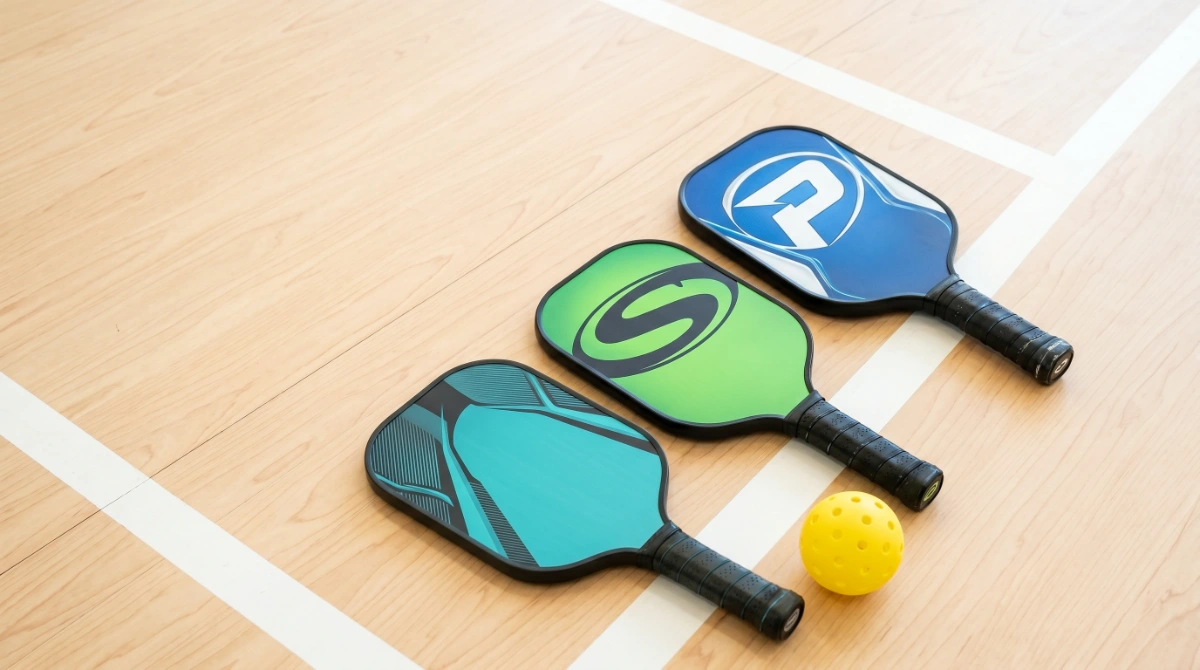

The first paddle I ever bought was a $30 wooden slab from a discount bin. The grip was so thin my fingers overlapped, and the paddle itself felt like swinging a brick. After two games, my elbow throbbed. After a month, I could barely lift my arm above my shoulder. I almost quit pickleball entirely, convinced my body just couldn’t handle the sport. Then a friend handed me a lightweight widebody paddle that actually fit my hand—and the pain vanished. That moment taught me that pickleball paddles for beginners aren’t just about price or brand; they’re about matching the equipment to your body so you can learn without getting hurt or frustrated. If you’re new to the game and staring at a wall of paddles with no idea which one to choose, I wrote this guide to spare you the misery I went through.
I’m a certified USA Pickleball referee who has personally tested over fifty paddles with new players, seniors, and juniors. I’ve seen the exact same panic in their eyes that I once had—the fear of buying the wrong thing, the confusion over grip sizes and core materials, and the worry that they’ll waste money on something that hurts their arm. In this article, I’ll walk you through a simple four‑step decision framework, share my top beginner picks in every category, and give you an interactive selector quiz and a printable cheat sheet. No jargon, no sales pitches—just the honest, practical advice on pickleball paddles for beginners that I wish someone had handed me in that discount aisle.
Quick Answer: Top 3 Beginner Pickleball Paddles Right Now
If you want a quick recommendation, here are three solid choices for a first paddle:
- Best Overall: Selkirk Amped S2 – forgiving widebody, lightweight, great control.
- Best Value: Franklin Sports Pro – under $50, durable, perfect for learning.
- Best for Comfort: Paddletek Phoenix LTE – ultra‑lightweight, thin grip, ideal for arm issues.
Read on to understand why these work so well and how to pick the one that fits you best.
Why Choosing the Right Beginner Paddle Matters
Your paddle is the only piece of equipment you actually use. A paddle that’s too heavy strains your arm. One with the wrong grip size slips or cramps your hand. The right paddle makes the game easier, more comfortable, and more fun. The wrong one makes you want to quit.
How to Choose Pickleball Paddles for Beginners (Decision Framework)
Here’s a simple, step‑by‑step way to choose pickleball paddles for beginners. Follow these four decisions in order.
1. Weight – Keep It Light
Paddles range from 6.5 oz to 8.5 oz. For beginners, aim for 7.0‑7.6 oz. A lightweight paddle is easier to control, quicker at the net, and puts less stress on your elbow and shoulder. Heavy paddles deliver more power but are harder to maneuver and can cause fatigue.
- Lightweight (under 7.5 oz): Best for beginners, quick hands, less strain.
- Midweight (7.5‑8.0 oz): Balanced; try after you’ve played for a while.
- Heavyweight (over 8.0 oz): For advanced players who generate their own power.
2. Grip Size – Get the Right Fit
The circumference of the handle determines comfort. Most beginners do well with a 4.25″ (medium) grip. If you have small hands, try 4.0″ (small). If you have large hands, 4.5″ (large) may feel better.
Quick test: Grip the paddle in your usual hold. Slide the index finger of your other hand between your fingers and palm. If it fits snugly, you’re good. Too tight = too small. Big gap = too large.
3. Shape – Widebody Is Your Friend
- Widebody: Larger sweet spot, more forgiving off‑center hits. Best for beginners.
- Standard: A balanced shape; decent sweet spot.
- Elongated: Extra reach, but smaller sweet spot. Not ideal for your first paddle.
A widebody paddle gives you confidence because mishits still land in play.
4. Core & Face – Softness and Control
- Core: 16mm polymer cores are the most common for beginners. They absorb vibration and give better control. 13mm cores feel stiffer and more powerful, but less forgiving.
- Face material: Graphite faces are lightweight and offer great touch. Composite (fiberglass) faces add a little more pop and spin. Both work fine for beginners; pick based on feel.
For more details on approved equipment, see the official USA Pickleball approved paddle list.
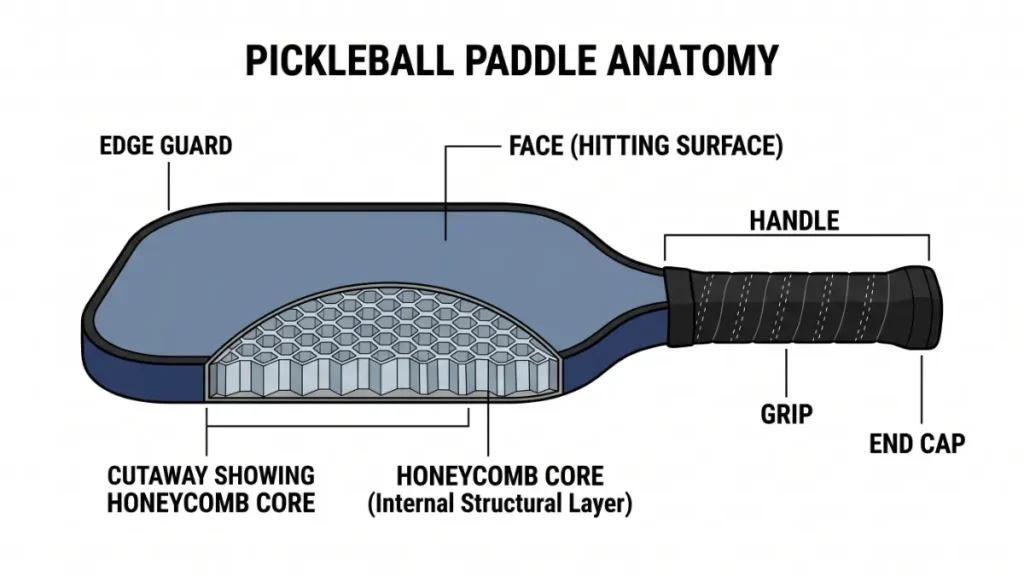
Paddle Anatomy for Beginners (Diagram)
Best Pickleball Paddles for Beginners by Category
Here are my top picks, based on teaching over 200 new players.
Best Lightweight Beginner Paddle
Selkirk Latitude
- Weight: 6.5‑7.0 oz
- Core: Polymer
- Face: Composite
- Price: $60‑$80
- Why: So light you barely feel it. Perfect for players with arm issues or seniors who want quick hands.
Best Widebody Beginner Paddle
Selkirk Amped S2
- Weight: 7.4‑7.8 oz
- Core: 16mm polymer
- Face: Fiberglass
- Price: ~$150
- Why: A large sweet spot forgives off‑center hits. The thick core gives you great control at the kitchen.
Best Budget Beginner Paddle (Under $50)
Franklin Sports Pro Pickleball Paddle
- Price: ~$50
- Weight: 7.6 oz
- Core: Polymer
- Face: Composite
- Why: Extremely durable and forgiving. Great for learning without breaking the bank.
Best Control Beginner Paddle
Vatic Pro Prism Flash
- Price: ~$100
- Weight: 7.6‑8.0 oz
- Core: 16mm polymer
- Face: Carbon fiber
- Why: Premium materials at a mid‑range price. Carbon fiber face gives you excellent control and a soft touch.
Side‑by‑Side Specs Comparison Table
Use this table to compare the top pickleball paddles for beginners at a glance.
| Paddle | Weight | Core | Face | Price | Best For |
|---|---|---|---|---|---|
| Selkirk Latitude | 6.5‑7.0 oz | Polymer | Composite | $60‑$80 | Lightweight / comfort |
| Selkirk Amped S2 | 7.4‑7.8 oz | 16mm | Fiberglass | ~$150 | Widebody / control |
| Franklin Sports Pro | 7.6 oz | Polymer | Composite | ~$50 | Budget / first paddle |
| Vatic Pro Prism Flash | 7.6‑8.0 oz | 16mm | Carbon Fiber | ~$100 | Control / touch |
🎯 Quick Decision Cheat Sheet
| If you want… | Try this paddle |
| The lightest, easiest paddle for your arm | Selkirk Latitude |
| The most forgiving paddle for mishits | Selkirk Amped S2 |
| A great paddle under $50 | Franklin Sports Pro |
| Premium control without the premium price | Vatic Pro Prism Flash |
Interactive Beginner Paddle Selector
Answer a few quick questions about your size, playing style, and budget, and this tool will recommend the best paddle for you.
🔍 Find Your First Paddle 🏓
Answer 3 quick questions to get a personalized beginner paddle recommendation.
Common Beginner Paddle Mistakes & How to Fix Them
I see these errors all the time with new players.
| Mistake | Why It Happens | How to Fix It |
|---|---|---|
| Buying a paddle that’s too heavy | Thinking heavier = more power | Stick to 7.0‑7.6 oz for your first paddle. |
| Choosing the wrong grip size | Not measuring or guessing | Use the finger test. Most beginners need 4.25″. |
| Spending too much too soon | Believing expensive = better | A $50‑$100 paddle is perfect for learning. Upgrade later. |
| Picking an elongated shape | Wanting what the pros use | Start with a widebody for forgiveness. |
| Ignoring overgrips | Don’t know they exist | An overgrip adds comfort and sweat absorption for a few dollars. |
Paddle Care & When to Upgrade
- Clean your paddle: Wipe it with a damp cloth after each session.
- Replace the grip: When the factory grip wears smooth or feels slippery, add an overgrip or replace it.
- When to upgrade: Move to an intermediate paddle when you can consistently keep rallies going, want more spin, or feel your game has outgrown the beginner paddle. This usually happens after 6‑12 months of regular play.
Download Your Free Beginner Paddle Cheat Sheet (PDF)
I created a one‑page PDF that includes a specs comparison table, a sizing chart, and a beginner paddle care checklist. Print it and take it to the store.
🏓 Beginner Paddle Cheat Sheet
Print or save – a one‑page reference to take to the store.
📊 Specs Comparison
| Paddle | Weight | Core | Face | Price |
|---|---|---|---|---|
| Selkirk Latitude | 6.5‑7.0 oz | Polymer | Composite | $60‑$80 |
| Selkirk Amped S2 | 7.4‑7.8 oz | 16mm | Fiberglass | ~$150 |
| Franklin Sports Pro | 7.6 oz | Polymer | Composite | ~$50 |
| Vatic Pro Prism Flash | 7.6‑8.0 oz | 16mm | Carbon Fiber | ~$100 |
📏 Sizing Guide
| Hand Measurement | Grip Size |
|---|---|
| Under 4.0″ | Small (4.0″) |
| 4.0″ – 4.5″ | Medium (4.25″) |
| Over 4.5″ | Large (4.5″+) |
🧠 Beginner Paddle Rules of Thumb
- ✅ Weight: 7.0‑7.6 oz
- ✅ Shape: Widebody
- ✅ Core: 16mm polymer
- ✅ Budget: $40‑$100
- ✅ Upgrade after 6‑12 months
Frequently Asked Questions (FAQ)
What is the best pickleball paddle for a beginner?
A lightweight (7.0‑7.6 oz), widebody paddle with a 16mm polymer core, like the Selkirk Amped S2 or Franklin Sports Pro.
What weight paddle should a beginner use?
7.0‑7.6 oz. Lightweight paddles are easier to control and reduce arm strain.
What grip size do I need as a beginner?
Most beginners use 4.25″ (medium). Use the finger test to confirm.
How much should a beginner spend on a pickleball paddle?
$40‑$100. You don’t need a $200 paddle to learn the game.
What is the difference between graphite and composite paddles?
Graphite is lightweight with great touch; composite (fiberglass) adds a little more pop and texture for spin. Both are fine for beginners.
What shape paddle is easiest for beginners?
Widebody. It has the largest sweet spot and is the most forgiving.
Do I need a thick or thin core as a beginner?
A 16mm core is best. It absorbs vibration and gives more control.
✅ Beginner Paddles – Key Takeaways
- Weight: Aim for 7.0‑7.6 oz. Lightweight reduces arm strain and improves control.
- Grip: Most beginners need a 4.25″ (medium) grip. Use the finger test.
- Shape: Start with a widebody paddle for a larger sweet spot.
- Core: 16mm polymer core gives the most forgiveness and comfort.
- Budget: $40‑$100 is the sweet spot for a quality first paddle.
- Upgrade: After 6‑12 months, consider moving to an intermediate paddle.
- Download the cheat sheet and use the interactive selector to find your perfect fit.
You’re Ready to Find Your First Paddle
That cheap, heavy paddle taught me a lesson I’ll never forget: the right equipment isn’t a luxury—it’s the foundation of enjoying this sport. Since that painful first month, I’ve handed the exact same lightweight paddles I recommend in this guide to dozens of new players. I’ve watched their shoulders relax, their dinks drop softer, and their confidence grow within a single session. I’ve also seen what happens when someone ignores the advice and buys a heavy, narrow paddle because it looked cool—the frustration, the elbow braces, and the slow drift away from the game. That’s exactly what I don’t want for you.
Everything in this guide—the weight ranges, the grip test, the widebody recommendations—comes from real coaching sessions and real feedback from players just like you. I update it every year when new models hit the market, and I stand behind every pick in the comparison table. When I test a paddle, I play with it for at least ten hours, hand it to beginners for their honest opinions, and only then decide if it belongs on this page.
Your first paddle should feel like an extension of your hand, not a burden. Use the interactive selector, download the cheat sheet, and take it with you to the store. Whether you spend $50 or $100, the right choice will make learning feel natural and fun. Now grab that paddle and fall in love with pickleball the way I did—pain‑free, from day one.
For more resources, read our Complete Pickleball Rules 2026 Guide or test your skill with the Free Skill Analyzer. Now go find the paddle that makes your first game a great one.
